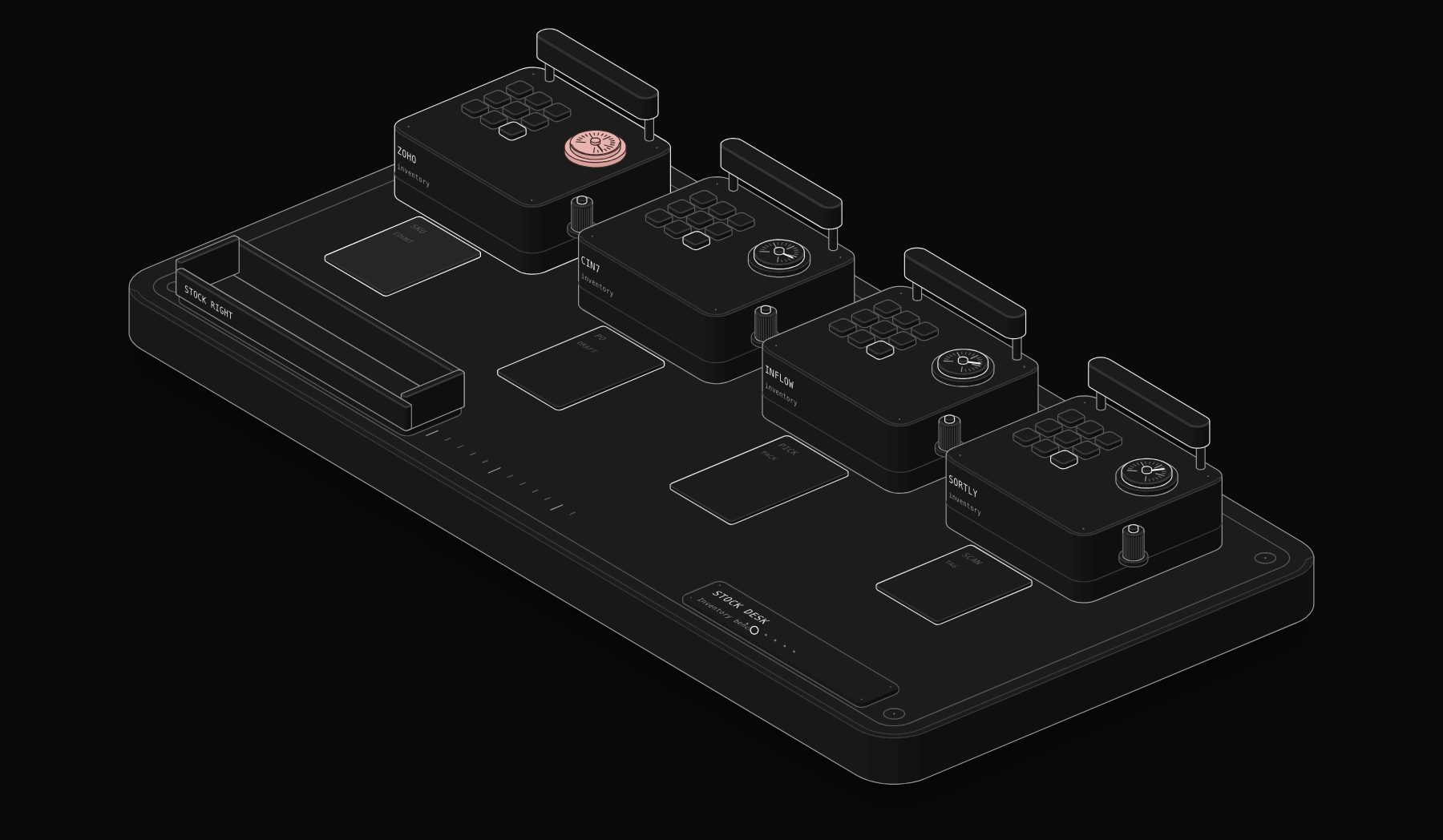
Inventory software is the system every other tool in a product business quietly depends on. Your store, your accounting, your purchasing and your shipping all read the same stock number, and when that number is wrong, every downstream automation is wrong with it. This comparison looks at four platforms small and mid-size businesses shortlist most often: Zoho Inventory, Cin7, inFlow and Sortly. Every price below was read on the vendor's own pricing page on November 17, 2026.
In short. Zoho Inventory is our pick for most small product businesses (8.2/10): a real free plan, paid plans from $29 per organization per month, and an API that makes automation straightforward. Cin7 (7.4/10) is built for high-volume, multichannel sellers who need warehouse and manufacturing planning, from $349 per month. inFlow (7.6/10) suits wholesalers, distributors and light manufacturers that want strong order and stock control from $99 per month. Sortly (7.0/10) is the simplest way to track physical items, tools and supplies, with a free plan and paid plans from $24 per month.
Why this decision matters more than it looks
Most inventory problems are not software problems at first. They start as a spreadsheet that one person keeps up to date, then a second sales channel arrives, then a second location, and the spreadsheet stops matching reality. The cost shows up as overselling, dead stock, rushed purchase orders and month-end counts that never reconcile with the books.
The right platform fixes three things at once: a single stock figure across every channel, purchasing that is driven by real reorder points instead of memory, and a clean sync to accounting so cost of goods sold is right without manual journal entries. The wrong platform gives you a nicer spreadsheet and the same problems.
How we score: the PURIST Fit Score
We weight four criteria equally, because each one decides whether the tool keeps working once the business grows.
| Criterion | What it measures | Weight |
|---|---|---|
| Ease of adoption | Can a small team set it up and use it daily without a consultant | 25% |
| Operational depth | Multi-location, batches and serials, purchasing, manufacturing, warehouse | 25% |
| Price for value | What a 5 to 15 person business actually pays for what it needs | 25% |
| Automation readiness | API, webhooks and integrations that let stock data flow into other systems | 25% |
Source: compiled by PURIST (purist.online), November 17, 2026.
The four platforms side by side
| Platform | Ease of adoption | Operational depth | Price for value | Automation readiness | PURIST Fit Score |
|---|---|---|---|---|---|
| Zoho Inventory | 8/10 | 7/10 | 9/10 | 9/10 | 8.2/10 |
| inFlow | 8/10 | 8/10 | 7/10 | 7.5/10 | 7.6/10 |
| Cin7 | 6/10 | 9.5/10 | 5.5/10 | 8.5/10 | 7.4/10 |
| Sortly | 9.5/10 | 4.5/10 | 8/10 | 6/10 | 7.0/10 |
Source: compiled by PURIST (purist.online), November 17, 2026.
The scores are our editorial judgment based on the published plans and features. They are not user ratings. Read the next sections for the reasoning, because the best tool for your business depends far more on your order volume and channels than on the overall score.
Pricing at a glance (checked November 17, 2026)
| Platform | Free plan | Entry paid plan | Mid plan | Top published plan |
|---|---|---|---|---|
| Zoho Inventory | Yes: 50 orders, 1 user, 1 location | Standard $29 per organization per month (billed annually): 500 orders per month, 3 users, 2 locations | Premium $79: 3,000 orders, 5 users, 4 locations. Plus $129: 7,500 orders, 10 users, 6 locations | Enterprise $249: 15,000 orders per month, 10 users, 10 locations |
| Cin7 | No (14-day free trial) | Standard $349 per month: 5 users, 2 integrations, 6,000 sales orders per year | Pro $599 per month: 10 users, 4 integrations, 24,000 orders per year, material requirements planning | Advanced $1,199 per month: 15 users, 6 integrations, 120,000 orders per year, advanced warehouse management |
| inFlow | No (free trial) | inFlow Stockroom from $69 per month (billed annually) for internal supplies | inFlow Inventory from $99 per month (billed annually) | inFlow Manufacturing from $169 per month (billed annually) |
| Sortly | Yes: 100 unique items, 1 user | Advanced $24 per month: 500 items, 2 users | Ultra $74 per month: 2,000 items, 5 users, purchase orders | Premium $149 per month: 5,000 items, 8 users, QuickBooks Online integration. Enterprise on quote |
Source: compiled by PURIST (purist.online), November 17, 2026.
Two details change the real cost. Sortly's displayed yearly prices include a 50% first-year discount for new customers, then a 20% yearly discount applies from the second year, so budget for a higher renewal. Cin7 notes that its prices are for new customers and exclude taxes, and that extra users, integrations and order volume can be bought on top of each plan.
Zoho Inventory: the best value for most small product businesses
Zoho Inventory is the platform we recommend first to a small business that sells physical products through a website, a marketplace or wholesale orders and wants one stock figure without a large monthly bill.
What you get. The free plan is a genuine starting point (50 orders a month, one user, one location), and the Standard plan at $29 per organization per month billed annually already covers composite items, dropshipping, backorders and a customer portal. Premium at $79 adds what most growing businesses need next: barcode generation, stock counting, serial and batch tracking, a vendor portal and customization and automation features. Plus and Enterprise add online store, marketing tools and, on Enterprise, Zoho Analytics and multi-currency per contact.
Where it is strongest. Price for value and automation. Zoho publishes a documented REST API and the product sits inside the wider Zoho ecosystem (Books for accounting, CRM, Commerce), so a sale, a purchase order or a stock adjustment can trigger the rest of your process without manual re-entry.
Where it is weaker. Order volume caps are monthly and plan-based, so a seasonal business needs to check its busiest month, not its average one. Deep warehouse management and manufacturing planning are lighter than in Cin7.
Best for: online and wholesale sellers with up to a few thousand orders a month who want accounting and CRM in the same family of tools.
Cin7: the operations platform for high-volume, multichannel sellers
Cin7 is a different category of purchase. At $349 per month for its Standard plan, it is built for businesses where inventory is the operation: several sales channels, wholesale and retail at once, production, and warehouses that need structured picking.
What you get. Every plan includes unlimited inventory locations. Standard covers 5 users, 2 e-commerce and app integrations and 6,000 sales orders a year. Pro, which Cin7 labels most popular, adds material requirements planning for manufacturers with 10 users and 24,000 orders a year. Advanced adds advanced warehouse management for 120,000 orders a year. Users, integrations and volume can be extended on each plan.
Where it is strongest. Operational depth. If you assemble products, run several warehouses or sell through multiple marketplaces at once, Cin7 is built for that complexity rather than stretched to it.
Where it is weaker. Price and setup effort. For a business with a few hundred orders a month, you would pay for planning and warehouse features you do not use, and implementation takes real time.
Best for: brands and distributors with high order volumes, several channels and production or warehouse complexity.
inFlow: strong order and stock control for wholesale and light manufacturing
inFlow organizes its pricing by product line rather than by one ladder of plans. inFlow Inventory starts at $99 per month billed annually and covers inventory and orders in one system, real-time stock across locations, picking, packing and shipping from any device and, according to the pricing page, more than 95 integrations. inFlow Manufacturing starts at $169 per month and adds bills of materials, assembly of products and bundles, labor and material cost tracking, and a view of what can be built from current stock. inFlow Stockroom starts at $69 per month for tracking internal supplies and consumables without reordering, costing or sales.
A notable detail for automation. inFlow's own website says you can connect Claude through inFlow's MCP server to create orders or update pricing by chatting, alongside a built-in AI report assistant. For a team that already works with AI assistants, that is a practical bridge between conversation and the stock system.
Where it is strongest. Wholesale and distribution workflows: purchase orders, sales orders, stock movements and fulfilment in one place, with a clear upgrade path to manufacturing.
Where it is weaker. There is no free plan, and the per-product pricing means a business that needs both inventory and manufacturing should compare the full bundle on the vendor's page.
Best for: wholesalers, distributors and kitting or light manufacturing businesses that ship from a warehouse.
Sortly: the simplest way to know where your things are
Sortly is the easiest of the four to adopt, and that is its point. It is built around items, folders, photos and QR or barcode labels, which makes it ideal for tools, equipment, spare parts, supplies and small product catalogs.
What you get. The free plan covers 100 unique items and one user. Advanced at $24 per month covers 500 items and 2 users with unlimited QR label creation. Ultra at $74 per month, labelled most popular, covers 2,000 items, 5 users, barcode labels and purchase orders. Premium at $149 per month covers 5,000 items, 8 users, custom role permissions and a QuickBooks Online integration. API and webhooks are listed on the Enterprise plan, which is quote-based.
Where it is strongest. Speed of adoption. A field team can scan, count and move items from a phone the same day.
Where it is weaker. It is not an order management system. If you sell through several channels and need sales orders, allocations and fulfilment, Sortly will not replace a tool like Zoho Inventory or inFlow, and automation through the API requires the Enterprise tier.
Best for: trades, maintenance teams, offices, schools and small stores tracking assets and supplies rather than high order volumes.
Which one should you choose?
If you sell online or wholesale with up to a few thousand orders a month: start with Zoho Inventory. The free plan lets you test with real data, and Premium at $79 covers barcodes, batch and serial tracking and stock counts.
If inventory is the operation (several channels, production, warehouses): shortlist Cin7 and request a demo with your real order volume and integration list, since users, integrations and volume can be added to each plan.
If you are a wholesaler, distributor or light manufacturer: compare inFlow Inventory ($99) and inFlow Manufacturing ($169) against Zoho Inventory Premium. inFlow is often the more natural fit for warehouse picking and assembly.
If you track tools, equipment and supplies rather than orders: Sortly will be live in a day. Choose Ultra if you need purchase orders.
The automations that make inventory software pay for itself
Choosing the platform is half the work. The return comes from the workflows around it. These are the automations we build most often for product businesses, whichever tool they use:
- 1 Low-stock purchase orders. When an item falls below its reorder point, a draft purchase order is created for the usual supplier and sent for approval instead of someone noticing the empty shelf. See how we design approval chains in our guide to purchase order approval automation.
- 2 One stock figure across channels. Every sale on the website, the marketplace or the wholesale portal adjusts the same stock record, and an alert fires when a channel shows stock that the warehouse does not have. Our guide to e-commerce automation workflows covers the store side.
- 3 Supplier invoices matched to receipts. When goods are received, the supplier invoice is matched to the purchase order and the receipt before payment. That is the classic three-way match described in our accounts payable comparison.
- 4 Accounting sync without journal entries. Sales, purchases and stock adjustments flow into the accounting system so cost of goods sold is right at month end. If you are still choosing that system, read our accounting software comparison.
- 5 A weekly dead-stock report. Items with no movement in 90 days, their value and their location are sent to the owner every Monday, so cash stuck on shelves becomes visible.
With n8n, most of these run through the platform's API using the HTTP Request node, with webhooks where the platform offers them. The same logic works in Zapier or Make for lower volumes.
Migration checklist: moving from a spreadsheet or another tool
- 1 Clean the item list first: one SKU per sellable unit, consistent names, units of measure and suppliers.
- 2 Count stock on a quiet day and import opening quantities with a date, so history starts from a known point.
- 3 Set reorder points from the last 90 days of sales, not from intuition.
- 4 Connect one sales channel, test for a week, then add the next.
- 5 Run the old and new system in parallel for one month-end close before switching off the spreadsheet.
Frequently Asked Questions
What is the best inventory management software for a small business?
For most small product businesses, Zoho Inventory offers the best balance: a free plan to start, paid plans from $29 per organization per month billed annually, barcode, batch and serial tracking from the $79 Premium plan, and an API for automation. If you track tools and supplies rather than orders, Sortly is simpler. If you have high volumes across several channels, Cin7 is built for that.
Is there a free inventory management software that is actually usable?
Yes. Zoho Inventory's free plan covers 50 orders a month, one user and one location, and Sortly's free plan covers 100 unique items and one user. Both are enough to test with real data before paying.
How much does Cin7 cost?
On November 17, 2026, Cin7's pricing page listed Standard at $349 per month, Pro at $599 per month and Advanced at $1,199 per month, in USD and excluding taxes, for new customers. Extra users, integrations and order volume can be purchased on top.
Is inFlow or Zoho Inventory better for wholesale?
Both handle sales and purchase orders well. inFlow is often the more natural fit when picking, packing and shipping from a warehouse and assembly are central, with Inventory from $99 and Manufacturing from $169 per month. Zoho Inventory is cheaper to start and stronger if you already use Zoho Books or Zoho CRM.
Can inventory software connect to my online store and accounting?
Yes, all four connect to accounting in some form, with Sortly's QuickBooks Online integration on its Premium plan. Store connections are built in on Zoho Inventory, Cin7 and inFlow. Where a native integration is missing, an automation platform such as n8n can sync orders and stock through the API.
When should a business move off spreadsheets for inventory?
The usual signals are a second sales channel, a second location, regular stock-outs or overselling, or month-end counts that no longer match the books. At that point the time spent reconciling costs more than the software.
Sources
Prices and plan details were read on the vendors' official pages on November 17, 2026: Zoho Inventory pricing, Cin7 pricing, inFlow pricing, Sortly pricing. Prices change: check the vendor's page before you buy.
Not sure which platform fits your volume and channels? Ask for a free written automation audit: we will tell you which tool fits and which inventory workflows to automate first, in writing.
Tags

Steve founded PURIST, a workflow automation studio working with n8n, Make and Claude AI, and is the point of contact on every project. Prices and features in our articles come from vendor documentation and public pricing pages. How we research and score tools.