Trade and local service businesses generate leads from Google searches, local directories, social media, referrals, and repeat customers. What they consistently fail to do is respond to those leads fast enough to win the job. Research from Harvard Business Review found that leads contacted within 5 minutes are 9 times more likely to convert than leads contacted after 30 minutes. For a painting contractor, plumber, or electrician who is on the tools during the day, a lead that arrives at 10am often does not get a response until 5pm. By then, the customer has called three competitors.
In short. Trade and local service businesses lose jobs mainly by responding too slowly. AI lead automation replies to every enquiry within seconds, asks qualifying questions about the job, books an estimate visit and follows up with leads who do not book, so the owner only steps in for qualified, scheduled work.
Figures in this guide are illustrative estimates built from typical costs and published sources, not results from PURIST clients. Individual results vary by starting baseline, team size, existing tooling, and how closely a business follows the specific workflow design described; treat the numbers here as a realistic range, not a guarantee.
AI lead generation automation solves this by responding to every enquiry instantly, qualifying the lead automatically, collecting the information needed to provide a quote, and booking an estimate appointment, all without the trade business owner lifting a finger until they are ready to take on the job.
Why Trade Businesses Lose Leads
The lead loss pattern in trade businesses is consistent regardless of trade type. A homeowner searches for a painting quote, finds three local contractors, submits enquiries to all three through their websites or Google, and waits. The first contractor to respond wins a disproportionate share of the work. A study of 2,241 US companies published in Harvard Business Review found that firms contacting a lead within an hour were nearly seven times more likely to qualify it than firms that waited longer (HBR). In markets where most contractors respond slowly, responding in minutes is a real advantage.
The problem is structural. Trade business owners are delivering services during the day, not monitoring enquiry inboxes. Admin staff, where they exist, handle a range of tasks and cannot respond instantly to every lead. Without automation, there is no mechanism for instant response.
The secondary failure is in follow-up. When a lead is not immediately ready to book, manual follow-up is inconsistent. Some leads are followed up once, some twice, some not at all. Customers who enquired and received a quote but did not immediately commit often book with a competitor who happened to follow up at the right moment. Systematic follow-up automation ensures no lead is forgotten.
The AI Lead Generation Automation Stack for Trade Businesses
A production lead generation automation system for a trade business combines several components:
- Lead capture: website form, Google Business Profile messaging, Facebook Lead Ads, or Thumbtack/Checkatrade integration
- Instant response: SMS and email sent within 60 seconds of lead submission
- AI qualification: Claude AI collects job details, size, timeline, and location via SMS or chat
- CRM record: all lead data captured and organised without manual entry
- Appointment booking: automated calendar link sent when lead is qualified
- Follow-up sequence: multi-touch follow-up over 14 days for leads who do not book immediately
The 60-Second Response Workflow
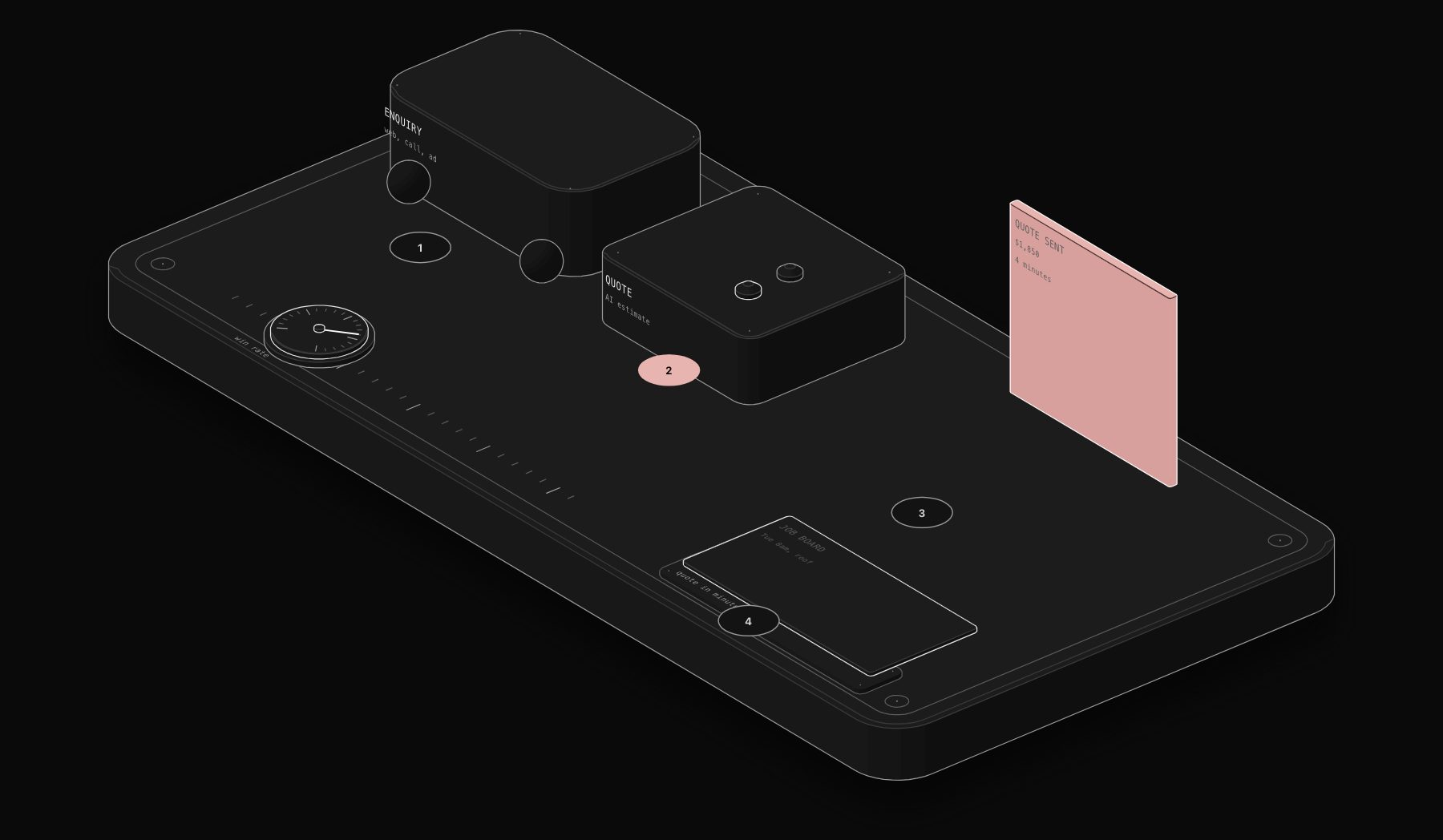
This is the highest-ROI workflow in the stack. When a lead is submitted through any channel, the automation fires within 60 seconds:
AI Qualification via SMS Conversation
Once the lead responds to the initial message, Claude AI takes over the conversation, collecting the information needed to prepare a quote:
Lead: "Walls and ceiling, going from a dark grey to white" AI Response: "Perfect, that is a full repaint with colour change, I will factor that in. Last question: are you looking to get this done in the next 2 to 4 weeks, or is it more of a longer-term plan?"
Lead: "Ideally in the next 2 weeks" AI Response: "That works well, I have availability in that window. Would you like me to send you a booking link to lock in a free estimate visit? It takes about 20 minutes and I will give you a firm quote on the day." ```
This conversation happens automatically, with Claude managing the exchange based on the responses received. By the time the trade business owner sees the conversation, they have a qualified lead with job details, timeline, and an appointment either booked or pending.
AI Lead Generation for Painting Contractors
For painting contractors specifically, the ai lead generation automation painting trade business workflow addresses the unique challenge that painting jobs have wide price ranges depending on surface area, surface condition, paint quality, and colour change requirements. Collecting this information before the estimate visit saves time and helps prioritise jobs by profitability.
The AI qualification sequence for painting:
- Surface area (number of rooms or square footage)
- Type of surfaces (walls, ceilings, trim, exterior)
- Current condition (good, patchy, significant repair needed)
- Colour change magnitude (same colour, light change, dark-to-light)
- Timeline (within 2 weeks, 1 month, 3 months)
- Property type (rented, owner-occupied, commercial)
This information allows the contractor to prioritise their estimate visits by likelihood of winning the job and approximate job value, rather than responding to all leads with equal urgency.
Automate Marketing Workflows for Property Firms
Property management companies and estate agents, prop firms, have a specific lead generation pattern that differs from consumer trade businesses. Their leads are typically landlords, investors, and developers who evaluate service providers over longer timeframes and require more sophisticated nurturing.
The automate marketing workflows prop firms approach uses a longer-cycle automation:
- Initial response: personalised within 60 seconds, with market report or landlord guide as value-add
- Follow-up sequence: 6-touch sequence over 30 days combining email, LinkedIn outreach, and SMS
- Value content: monthly market update, rental yield data, or property management insights sent automatically
- Re-engagement: quarterly reactivation campaign for contacts who enquired but did not convert
For property firms managing multiple landlord relationships, the CRM automation layer is particularly important. Automated portfolio review reminders, renewal alerts, and maintenance update notifications keep the firm top of mind without requiring manual relationship management.
Follow-Up Sequence for Unconverted Leads
The 14-day follow-up sequence for trade leads who do not immediately book is the most underutilised component of the automation stack. Most trade businesses abandon leads after one or two contacts, while many homeowners simply have not decided yet. A polite, spaced sequence keeps you in the running without anyone having to remember to chase.
| Day | Channel | Message |
|---|---|---|
| 0 | SMS + Email | Instant response + qualification questions |
| 1 | SMS | Follow-up if no response to initial |
| 3 | Social proof email with reviews and photos | |
| 5 | SMS | "Still looking for a painter? I have a cancellation slot next week" |
| 7 | Before/after photos of recent similar job | |
| 10 | SMS | Final follow-up + limited availability message |
| 14 | "Archiving your enquiry, let me know if you decide to proceed" |
All messages stop immediately when the lead books, responds positively, or explicitly says they have gone with another contractor.
ROI for Trade Businesses
The ROI from lead generation automation for trade businesses is unusually high because the cost of a lost lead is concrete: it is the margin on a job that went to a competitor.
| Metric | Typical manual process | With automation | How to measure it |
|---|---|---|---|
| Lead response time | Hours, whenever someone gets to it | Under a minute, day and night | Time from enquiry to first reply |
| Follow-up coverage | One or two attempts, if any | Every lead gets the full sequence | Share of leads that received every follow-up |
| Lead-to-estimate conversion | Your current baseline | Track the change after go-live | Estimates sent divided by leads |
| Estimate-to-booking conversion | Your current baseline | Track the change after go-live | Jobs booked divided by estimates |
| Admin time per lead | Manual replies, calls and notes | Mostly automated, human only for the quote | Minutes of admin per lead |
Illustrative example: if better lead response wins a painting contractor 3 extra jobs per month at an average job value of £2,000, that is £6,000 per month in additional revenue from the same lead volume. Run the same sum with your own job value and win rate.
If you run a trade business and would rather have this built for you, see our done-for-you plumbing business automation, HVAC automation, roofing company automation and electrician business automation services.
Frequently Asked Questions
What is AI lead generation automation for trade businesses?
AI lead generation automation for trade businesses uses AI models and workflow automation to respond to every lead instantly, qualify them automatically via SMS conversation, collect the information needed for a quote, and book estimate appointments, all without the business owner manually handling each enquiry. It enables a one-person trade business to respond as fast as a large company with a dedicated admin team.
How does AI qualify leads for a painting contractor?
When a lead submits an enquiry, Claude AI engages them in a natural SMS conversation to collect the specific information a painter needs: number of rooms, surface types, current condition, colour change, and timeline. This happens automatically and the conversation continues until the lead is either qualified and booked or identified as not ready to proceed. The painter sees a summary of each conversation rather than managing the exchange manually.
Tags

Steve founded PURIST, a workflow automation studio working with n8n, Make and Claude AI, and is the point of contact on every project. Prices and features in our articles come from vendor documentation and public pricing pages. How we research and score tools.