Airtable pricing looks simple on the pricing page: Free, Team at $20, Business at $45 and a custom Enterprise Scale plan. The details that decide your bill sit lower down: who counts as a paid collaborator, how many records fit in one base, and how many automation runs your workspace gets each month. This guide explains every Airtable plan as PURIST read it on Airtable's pricing page and its official plans documentation on November 21, 2026, then compares Airtable with Smartsheet and with the open-source alternatives NocoDB and Baserow.
In short. Airtable Free costs $0 with 1,000 records per base, 100 automation runs a month and up to 5 editors. Team costs $20 per collaborator per month billed annually or $24 monthly, with 50,000 records per base and 25,000 automation runs a month. Business costs $45 billed annually or $54 monthly, with 125,000 records per base, 100,000 automation runs and unlimited API calls. Enterprise Scale is priced by Airtable's sales team. On Team, anyone with Commenter access or higher is billed; on self-serve Business, only Editors and above. Smartsheet starts at $9 per member per month billed yearly, Baserow at $10 and NocoDB at $12 per seat, and both open-source tools can also be self-hosted.
How much does Airtable cost?
Airtable costs $0 on the Free plan, $20 per collaborator per month on Team and $45 per collaborator per month on Business, both billed annually. Paid monthly, Team costs $24 and Business $54, so annual billing saves about 17 percent. Enterprise Scale has custom pricing from Airtable's sales team. Airtable bills per workspace, not per account, so you can keep some workspaces on Free and upgrade only the one your team works in. The number that most often surprises buyers is who you pay for: on Team, every collaborator with Commenter, Editor, Creator or Owner access to the workspace (or to a base in it) is billable, and only read-only collaborators are free. A ten-person team where three people only comment still pays for ten seats on Team. On self-serve Business, Commenters are free and you pay for Editors and above.
Airtable plans compared
| Free | Team | Business (self-serve) | Enterprise Scale | |
|---|---|---|---|---|
| Price per collaborator per month | $0 | $20 annual, $24 monthly | $45 annual, $54 monthly | Custom |
| Records per base | 1,000 | 50,000 | 125,000 | Set by contract |
| API calls per workspace per month | 1,000 | 100,000 | Unlimited | Set by contract |
| Attachment storage per base | 1 GB | 20 GB | 100 GB | Set by contract |
| Revision and snapshot history | 2 weeks | 1 year | 1 year | Set by contract |
| Unique automations per base | 75 | 100 | 150 | Set by contract |
| Automation runs per workspace per month | 100 | 25,000 | 100,000 | Set by contract |
| AI credits | 500 per editor and above, per month | 15,000 per billable collaborator, per month | 20,000 per paid user, per month | Set by contract |
| Who is billed | Nobody | Commenters, Editors, Creators, Owners | Editors, Creators, Owners | Set by contract |
| Extras | Unlimited read-only collaborators; 5 editors; 50 commenters | Interfaces, forms, timeline and Gantt views, extensions | Two-way sync, admin panel | Sales-led governance and scale |
Source: compiled by PURIST (purist.online) from vendor pricing pages, November 21, 2026.
Source: Airtable's plans documentation and pricing page, read by PURIST on November 21, 2026. "Set by contract" means the figure is not published on the self-serve pages.
Airtable free plan: what you get and where it stops
The Airtable free plan suits individuals and very small teams. It includes unlimited read-only collaborators, up to 5 collaborators with Editor or Creator permissions and up to 50 with Commenter permissions. The limits that matter in practice are 1,000 records per base, 1,000 API calls per workspace per month and 100 automation runs per workspace per month. A base that logs every form submission or syncs with a CRM will cross 1,000 records quickly, and an automation that fires on each new record will use 100 runs in days. Every new account also gets a 14-day trial of the Team plan on its first workspace; after the trial, the workspace drops back to Free unless you upgrade.
Airtable Team plan: is it worth $20?
The Team plan is Airtable's main plan for small teams. It raises the limits fifty-fold on records (50,000 per base) and 250-fold on automation runs (25,000 a month), adds a year of revision history and 20 GB of attachments per base, and unlocks interfaces, forms, timeline and Gantt views, extensions and record colouring. It is worth it as soon as your base is a working system rather than a list. The point to watch is billing: Commenters are billable on Team, so share read-only access with people who only need to look.
Airtable Business plan and Enterprise Scale
The self-serve Business plan, at $45 per collaborator per month billed annually, is for departments that need more scale and basic administration: 125,000 records per base, unlimited API calls, 100,000 automation runs a month, 100 GB of attachments per base, two-way sync and an admin panel. Business and Enterprise Scale plans require a private email domain, so Gmail or Yahoo addresses cannot upgrade to them. Enterprise Scale is sold by Airtable's sales team for organisations with governance, security and data-scale requirements; its pricing is not published.
Airtable AI pricing
AI is included as monthly credits rather than a separate add-on on the self-serve plans: 500 credits per editor on Free, 15,000 per billable collaborator on Team and 20,000 per paid user on Business, according to Airtable's plans documentation. The pricing page also promotes AI app building and AI agents inside Airtable. What a credit buys depends on the feature you use, so test your real AI fields during the 14-day trial before relying on the allowance.
What a real team pays for Airtable
| Team | Plan | Monthly cost (annual billing) |
|---|---|---|
| 3 editors | Team | $60 |
| 5 editors and 5 commenters | Team (commenters billable) | $200 |
| 5 editors and 5 commenters | Business (commenters free) | $225 |
| 10 editors | Team | $200 |
| 10 editors | Business | $450 |
Source: compiled by PURIST (purist.online) from vendor pricing pages, November 21, 2026.
Business with five editors and five commenters costs only $25 more than Team in this example, because Commenters are free on Business. For comment-heavy teams, compare both plans on your real mix of permissions.
Airtable vs Smartsheet
| Airtable | Smartsheet | |
|---|---|---|
| Entry paid plan | Team: $20 per collaborator (annual), $24 monthly | Pro: $9 per member (yearly), $12 monthly, 1 to 10 members |
| Mid plan | Business: $45 (annual), $54 monthly | Business: $19 per member (yearly), $24 monthly, 3+ members |
| Free collaborators | Read-only collaborators | Unlimited free Contributors on Pro; unlimited Guests and Contributors on Business |
| Automations | 25,000 runs a month on Team | 250 a month on Pro; unlimited on Business |
| Best at | Relational databases and custom apps on your data | Spreadsheet-style project, programme and portfolio management |
Source: compiled by PURIST (purist.online) from vendor pricing pages, November 21, 2026.
Smartsheet is cheaper per seat and lets more people collaborate for free, and its Business plan includes unlimited automations. Airtable is the stronger database: linked records, interfaces and app building on top of your data. Choose Smartsheet if your team thinks in project plans and Gantt charts; choose Airtable if your team thinks in records, such as clients, orders, assets or content. Smartsheet prices were read on smartsheet.com/pricing on November 21, 2026.
Open-source Airtable alternatives: NocoDB and Baserow
| NocoDB (cloud) | Baserow (cloud) | |
|---|---|---|
| Free plan | Free for up to 3 users; 3 editor seats, 10 commenter seats, 1,000 API calls a month | 3,000 rows per workspace, 2 GB storage |
| First paid plan | Plus: $12 per seat a month billed annually ($15 monthly), or unlimited seats for $108 a month billed annually; 50,000 records, 30,000 automation runs | Premium: $10 per user a month billed yearly ($12 monthly); 50,000 rows per workspace, 20 GB storage |
| Next plan | Business: $24 per seat a month billed annually, or unlimited seats for $216 a month; 300,000 records, 120,000 automation runs | Advanced: $18 per user a month billed yearly ($22 monthly); 250,000 rows per workspace, 100 GB storage |
| Self-hosting | Community edition, free and self-deployed | Self-host edition available |
Source: compiled by PURIST (purist.online) from vendor pricing pages, November 21, 2026.
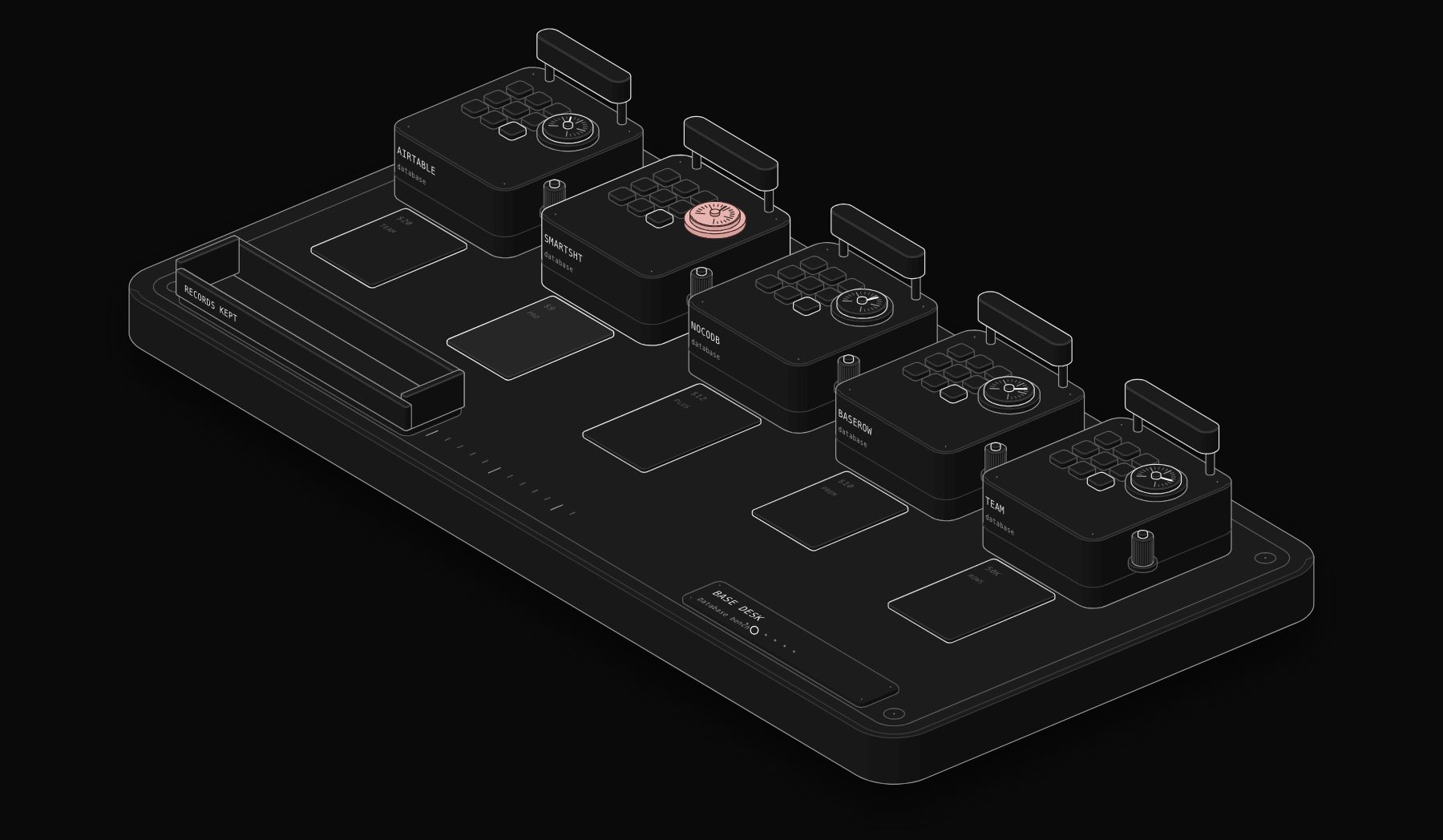
NocoDB and Baserow are the two names people search most after "Airtable pricing" (2,900 searches a month each in the US, according to DataForSEO's November 2026 data). Both are open source, both look and feel like Airtable, and both can run on your own server, which removes per-seat fees but adds hosting and maintenance. NocoDB's flat "unlimited seats" pricing is unusual: pay the equivalent of 9 users and every further user is free. For a full list, see our Airtable alternatives guide. Prices read on nocodb.com/pricing and baserow.io/pricing on November 21, 2026.
How to keep your Airtable bill down
- 1 Give read-only access to people who only look. Read-only collaborators are free on every plan; Commenters are billable on Team.
- 2 Upgrade one workspace, not the account. Billing is per workspace, so keep personal or archive workspaces on Free.
- 3 Move heavy automations outside Airtable. Automation runs are capped per workspace. A workflow tool such as n8n can read and write Airtable through its API and run as often as you need; our guide to Airtable automation with n8n shows how.
- 4 Archive old records. Record limits are per base, so move finished projects or old orders to an archive base.
- 5 Choose annual billing once the base is stable. It saves about 17 percent on Team and Business.
Airtable for nonprofits, students and education
Airtable's plans documentation lists separate self-serve plans for nonprofits, students and education, alongside Team and Business. The discounts and eligibility rules are set by Airtable and are not shown on the main pricing page we read; apply through Airtable's own nonprofit and education pages and confirm the terms before committing a whole organisation.
Airtable enterprise pricing
Airtable does not publish Enterprise Scale prices. The plans documentation says the Business and Enterprise Scale plans can be sold and managed by Airtable's sales team, with billing "calculated differently" from self-serve plans. If you are negotiating, bring three numbers: the number of billable editors (not total users), the record volume you expect in two years, and the automation runs you use today. Those are the limits that drive the price, and the ones you can reduce by moving heavy automation and archives outside Airtable.
Airtable vs Google Sheets
Google Sheets is free with a Google account and familiar to everyone; Airtable is a relational database that looks like a spreadsheet. Sheets is the better choice for calculations, financial models and one-off lists. Airtable is the better choice when rows are real things with relationships (clients linked to projects linked to invoices), when you need forms, interfaces and permissions for different people, or when automations should run on each new record. Many teams start in Sheets and move to Airtable when the sheet becomes the system the business runs on.
Is Airtable worth the price?
Airtable is worth its price when it replaces several tools or a custom app: a CRM-lite, a content calendar, an inventory list and an approvals process can live in one base with forms and interfaces. It is poor value when it is used as a shared spreadsheet, because you pay $20 to $45 per editor for features nobody uses. A simple test: if your base has linked tables, at least one interface and at least one automation that saves real time every week, it is earning its keep.
Frequently asked questions
How much does Airtable cost per month?
Airtable Team costs $20 per collaborator per month billed annually or $24 billed monthly. Business costs $45 billed annually or $54 monthly. The Free plan costs $0, and Enterprise Scale is priced by Airtable's sales team.
Is Airtable free?
Yes, Airtable has a free plan with 1,000 records per base, 1,000 API calls and 100 automation runs per workspace per month, up to 5 editors and unlimited read-only collaborators. New accounts get a 14-day Team trial on their first workspace.
What is included in the Airtable Team plan?
The Team plan includes 50,000 records per base, 100,000 API calls and 25,000 automation runs per workspace per month, 20 GB of attachments per base, one year of revision history, interfaces, forms, timeline and Gantt views, and 15,000 AI credits per billable collaborator per month.
Who counts as a paid user in Airtable?
On the Team plan, every collaborator with Commenter, Editor, Creator or Owner permissions is billed. On the self-serve Business plan, Owners, Creators and Editors are billed, and Commenters are free. Read-only collaborators are free on every plan.
What are the Airtable free plan limits?
1,000 records per base, 1,000 API calls per workspace per month, 1 GB of attachments per base, two weeks of revision history, 75 unique automations per base and 100 automation runs per workspace per month, with up to 5 editors and 50 commenters.
Is Smartsheet cheaper than Airtable?
Per seat, yes. Smartsheet Pro costs $9 per member per month billed yearly and Business $19, against $20 and $45 for Airtable Team and Business. Airtable is the stronger relational database; Smartsheet is stronger for spreadsheet-style project management.
What is the best free alternative to Airtable?
NocoDB and Baserow are the best-known open-source alternatives. Both have free cloud plans and can be self-hosted, so you pay for a server instead of per seat.
Sources
Read by PURIST on November 21, 2026: Airtable pricing, Airtable plans documentation, Smartsheet pricing, NocoDB pricing and Baserow pricing. US search volumes from DataForSEO, November 2026. Prices change: confirm on the official page before buying.
Want Airtable records created, updated and synced with your CRM and invoicing automatically? See workflow automation services by PURIST.
Tags

Steve founded PURIST, a workflow automation studio working with n8n, Make and Claude AI, and is the point of contact on every project. Prices and features in our articles come from vendor documentation and public pricing pages. How we research and score tools.