Speed to lead is the time between a potential customer raising their hand (filling a form, calling, sending a message, booking a demo) and your business making the first real contact. It is one of the few sales metrics with strong, published evidence behind it and one of the easiest to improve with automation. This guide explains what speed to lead means, what the research shows, how to measure it, and how to bring it down to minutes, including at night and at weekends, without hiring.
In short. Speed to lead is the time from a new lead's first enquiry to your first meaningful response. A Harvard Business Review study of 2,241 US companies found that firms that tried to contact a lead within an hour were nearly seven times as likely to qualify it as firms that waited longer. The fix is a workflow: capture every lead in one place, send an instant personal acknowledgement, alert the right person, qualify with a few questions, offer a booking link, and follow up until the lead answers or says no. A small business can set this up in its existing CRM, or on n8n across any tools, with a human approving anything that goes beyond the first acknowledgement.
What is speed to lead?
Speed to lead is a sales metric: the elapsed time from the moment a lead contacts you to the moment someone (or something acting for you) responds in a way that moves the conversation forward. A meaningful response answers the enquiry, asks a qualifying question or offers a next step such as a call or a visit; an automatic "we received your message" email on its own does not count. The metric matters because interest fades quickly and buyers usually contact several businesses at once. The first company to respond well often sets the terms of the conversation. Speed to lead is measured per lead, then summarised as a median (the typical response time) and as the share of leads answered within a target, such as five minutes during business hours or one hour overall. It applies to every business that receives enquiries: B2B services, real estate, home services, clinics, agencies, education and SaaS.
What the research shows
The most cited study is "The Short Life of Online Sales Leads", by James B. Oldroyd, Kristina McElheran and David Elkington, published in Harvard Business Review in March 2011. The authors audited how 2,241 US companies responded to web-generated leads. Their headline finding: firms that tried to contact potential customers within an hour of receiving a query were nearly seven times as likely to qualify the lead (to have a meaningful conversation with a decision maker) as firms that tried to contact the customer even an hour later. The study is more than a decade old, and buyer behaviour has changed since, but nothing in the way people buy today, with instant messaging and several quotes requested at once, suggests that slower responses have become an advantage. PURIST treats it as the starting point, then measures the business's own numbers rather than promising a multiplier.
How to measure speed to lead
| Metric | How to calculate it | Why it matters |
|---|---|---|
| Median time to first response | Middle value of (first response time minus lead created time) across leads | The typical experience, not distorted by outliers |
| Share answered within 5 minutes (business hours) | Leads answered within 5 minutes divided by leads received in business hours | Shows whether your process is truly fast |
| Share answered within 1 hour (all hours) | Leads answered within 1 hour divided by all leads | Includes nights and weekends, where most delays hide |
| Leads never contacted | Leads with no response divided by all leads | The most expensive number, often invisible |
| Attempts before contact | Average number of calls or messages before the lead answers | Shows whether follow-up is persistent enough |
Source: compiled by PURIST (purist.online), November 21, 2026.
To measure it, every lead must be timestamped on arrival in one system (your CRM), and every first response must be logged there too. If leads arrive in several inboxes, phones and forms, the first job is to bring them into one place.
Why most businesses are slow
- 1 Leads arrive in too many places. Website forms, a shared inbox, a personal inbox, missed calls, social messages and marketplaces. Nobody sees all of them.
- 2 No owner. Without a rule for who answers which lead, everyone assumes someone else did.
- 3 Business hours. Leads that arrive in the evening or at weekends wait until the next working morning.
- 4 Manual research first. Salespeople look up the company before replying, which delays the first touch.
- 5 One attempt only. A single call or email that goes unanswered ends the process.
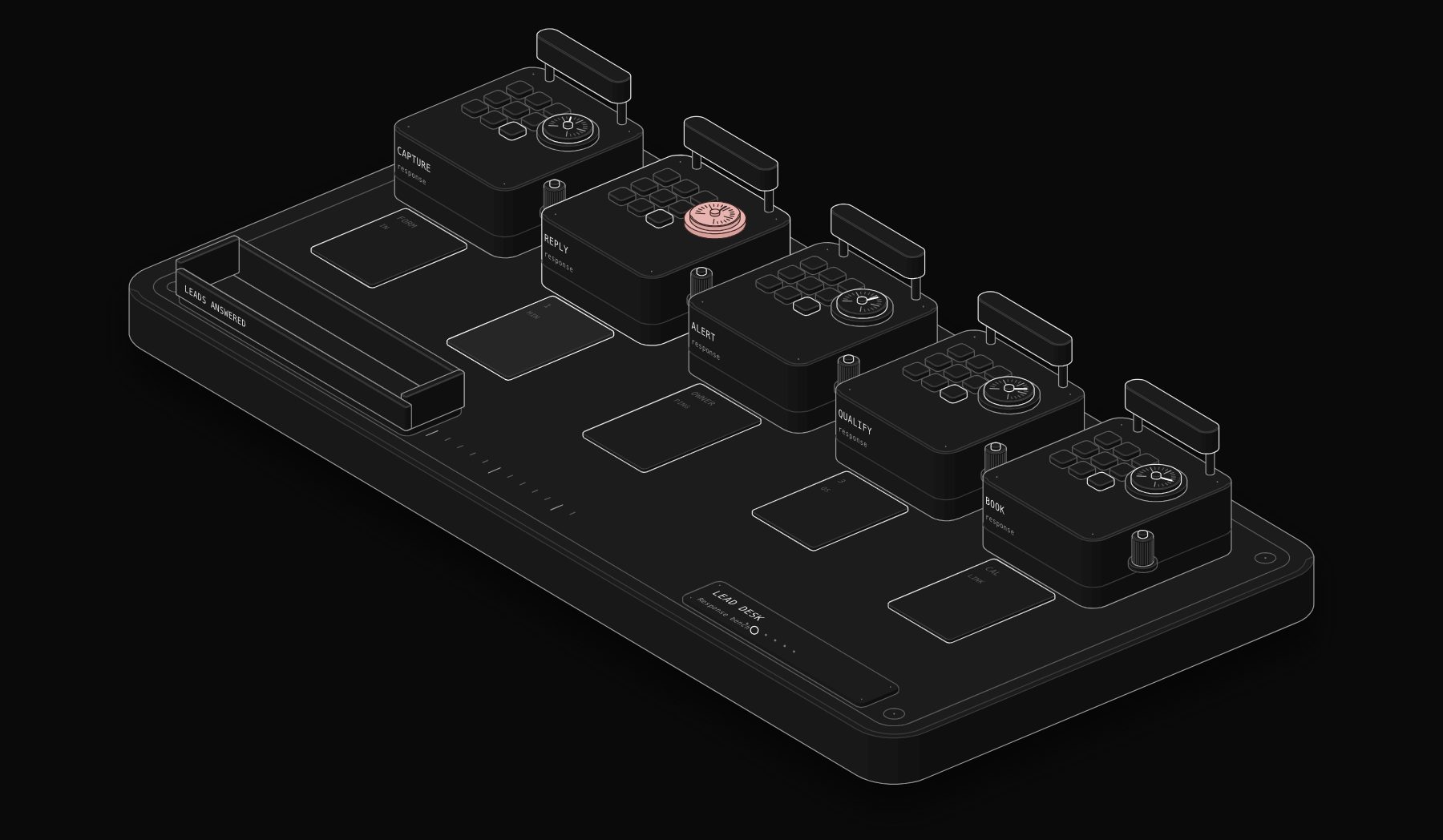
How to automate speed to lead: the 6-step workflow
- 1 Capture every lead in one place. Connect forms, email, missed calls and messages to your CRM so each lead is created with a timestamp and its source.
- 2 Acknowledge instantly, personally. Within a minute, send a reply that uses the lead's name and refers to what they asked, by the channel they used. AI can draft this from the enquiry; for first replies, a well-written template with the details filled in is often enough.
- 3 Alert the right person. Assign the lead by rule (service, region, value) and notify the owner by mobile push, SMS or chat, not just email.
- 4 Qualify with two or three questions. Ask what decides the fit: budget range, timing, location or scope. An AI step can read the answers and score the lead.
- 5 Offer the next step. Include a booking link or a clear next action, so a ready buyer can commit without waiting.
- 6 Follow up until there is an answer. A short sequence over the following days, across channels, stopping as soon as the lead replies or opts out.
Steps 2 and 4 are where AI helps most: understanding a messy enquiry, drafting a personal reply and scoring the answers. Keep a person in the loop for anything beyond the first acknowledgement until the drafts are reliably right. PURIST's rule for every build is that anything that sends, publishes or pays waits for a human approval, and the approval itself can be one tap on a phone.
After-hours and missed calls
Most slow responses happen outside office hours. Two automations close the gap. First, an instant reply to forms and emails at any hour, with a booking link, so a lead who enquires at 9 p.m. can book before contacting a competitor. Second, a text-back for missed calls: when a call goes unanswered, the caller receives a text within a minute offering a callback time or a booking link. We show how to build the second one in n8n missed-call SMS recovery, and the voice option in our AI receptionist guide.
Speed to lead tools
| Option | How it handles speed to lead | Best for |
|---|---|---|
| Your CRM's own automation | Instant replies, assignment and tasks inside HubSpot, Zoho, Pipedrive and others | Teams whose leads already arrive in the CRM |
| GoHighLevel | Forms, SMS, missed-call text-back, booking and workflows in one platform | Local service businesses and agencies |
| AI receptionist | Answers calls and books appointments | Businesses that live on the phone |
| n8n workflow | Connects every lead source, AI qualification, alerts and follow-up across any tools | Businesses with leads in several systems, or a specific process |
Source: compiled by PURIST (purist.online), November 21, 2026.
For the CRM choice itself, see the best CRM for small business and GoHighLevel vs HubSpot.
Speed to lead in real estate and home services
Real estate and home services are where speed to lead is most visible. A buyer enquiring about a listing, or a homeowner with a broken boiler, usually contacts several businesses at once and works with whoever answers first and clearly. The workflow above applies directly, with two additions: route by area or property so the right agent or technician is alerted, and make the first message offer a specific next step (a viewing slot, an emergency call-out window) rather than a general "how can we help". Our guides to property management automation and HVAC automation cover those setups.
Speed to lead checklist
| Check | Done? |
|---|---|
| Every lead source feeds one CRM with a timestamp | |
| Instant personal acknowledgement on every channel | |
| Rule-based assignment and mobile alert to the owner | |
| Two or three qualifying questions, scored | |
| Booking link in the first reply | |
| Follow-up sequence that stops on reply or opt-out | |
| Missed-call text-back | |
| Weekly report: median response time, share within 5 minutes and 1 hour, leads never contacted |
Source: compiled by PURIST (purist.online), November 21, 2026.
Speed to lead templates
A first reply only works if it sounds like a person who read the enquiry. Three templates PURIST uses as a starting point, to adapt to your voice:
Form enquiry, business hours
Hi {first name}, thanks for getting in touch about {topic from the form}. I'm {your name} and I'll be looking after this. Quick question so I can come back with something useful: {one qualifying question}? If it's easier, you can pick a time to talk here: {booking link}.
After hours
Hi {first name}, thanks for your message about {topic}. Our team is back at {time} tomorrow and I'll make sure you hear from us first thing. If you'd like to lock in a time now, here's my calendar: {booking link}.
Missed call text-back
Hi, this is {your name} from {business}. Sorry I missed your call. How can I help? You can reply here or book a callback: {booking link}.
Keep them short, use the lead's own words, ask one question, and offer one next step.
A follow-up cadence that respects the lead
| When | Channel | Message |
|---|---|---|
| Minute 1 | The lead's channel | Personal acknowledgement and one question |
| Within the hour | Call or message from the owner | Real conversation or voicemail |
| Day 1 | Short recap and booking link | |
| Day 3 | SMS or message, if the lead agreed to it | One-line check-in |
| Day 7 | Useful resource and a clear "still interested?" | |
| Then | None | Stop, or move to a monthly newsletter if they opted in |
Source: compiled by PURIST (purist.online), November 21, 2026.
Stop the sequence the moment the lead replies, books or opts out, and respect the rules on consent for SMS and marketing email in your country.
Measuring speed to lead in your CRM
Most CRMs record when a lead is created and when activities are logged. To report speed to lead, make sure the first response is logged as an activity (automatically, when it is sent by a workflow), then build a report of the time between the two for leads created in the last 30 days. Show the median, the share within 5 minutes and within 1 hour, and the list of leads never contacted. Review it weekly with whoever owns the leads. If your leads arrive in several systems, a workflow can create the CRM record and the response log at the same moment, which makes the report reliable.
Done-for-you speed to lead
The 6-step workflow above can be built in-house with n8n, Make or your CRM's own automation. If you would rather have it designed, built and monitored for you, see our speed to lead automation service, or the AI appointment setter if you also want the first conversation and the booking handled automatically.
Frequently asked questions
What is speed to lead?
Speed to lead is the time between a potential customer's first enquiry and your business's first meaningful response. It is measured per lead and summarised as a median response time and as the share of leads answered within a target time.
Why is speed to lead important?
Interest fades and buyers contact several businesses at once. A Harvard Business Review study of 2,241 US companies found that firms that tried to contact a lead within an hour were nearly seven times as likely to qualify it as firms that waited longer.
What is a good speed to lead?
Aim to respond within minutes during business hours and within an hour at all times, and track the share of leads that meet those targets. The right target depends on your market; what matters is measuring your own number and improving it.
What are the speed to lead statistics?
The best-known figure comes from "The Short Life of Online Sales Leads" (Harvard Business Review, 2011): among 2,241 US companies audited, firms that tried to contact a lead within an hour were nearly seven times as likely to qualify it as those that waited longer. Be careful with other statistics that circulate without a named study behind them.
How do I improve speed to lead?
Bring every lead into one CRM, send an instant personal acknowledgement, alert the right person on mobile, ask two or three qualifying questions, include a booking link, follow up until the lead answers, and add a missed-call text-back for phone enquiries.
Can AI improve speed to lead?
Yes. AI can read an enquiry, draft a personal reply in seconds, ask qualifying questions and score the answers, at any hour. Keep a human approval step for messages beyond the first acknowledgement until the drafts are consistently right.
Sources
Harvard Business Review, "The Short Life of Online Sales Leads", by James B. Oldroyd, Kristina McElheran and David Elkington, March 2011, page checked by PURIST on November 21, 2026. The workflow, metrics and checklist are PURIST's own.
Want every new lead answered in minutes, day and night, with your approval before anything important goes out? See CRM and sales automation by PURIST.
Tags

Steve founded PURIST, a workflow automation studio working with n8n, Make and Claude AI, and is the point of contact on every project. Prices and features in our articles come from vendor documentation and public pricing pages. How we research and score tools.