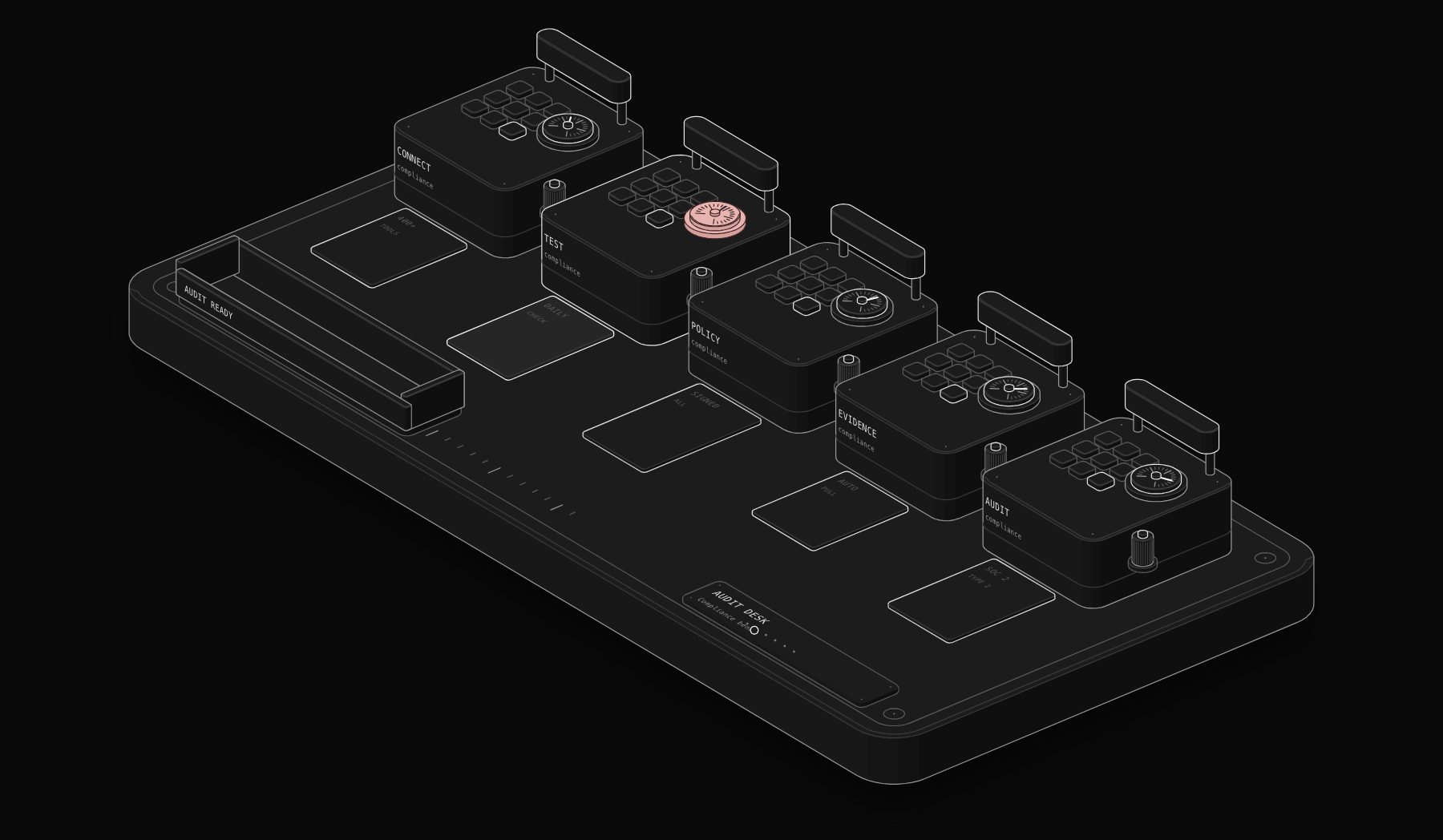
Compliance automation software connects to your cloud, identity, HR and code tools, continuously collects the evidence an auditor needs, monitors controls, and manages policies, risks, vendors and employee tasks for frameworks such as SOC 2, ISO 27001, HIPAA and GDPR. Instead of spending weeks gathering screenshots before an audit, a company keeps its compliance status up to date every day. This guide explains what compliance automation does, what SOC 2 compliance actually requires, and compares Vanta, Drata, Secureframe, Thoropass, Sprinto and other compliance automation tools on what PURIST could verify on their own pages on November 21, 2026.
In short. Compliance automation tools automate evidence collection, control monitoring, policies, access reviews and security questionnaires, but they do not issue your SOC 2 report: a licensed CPA firm does. Secureframe publishes a starting price (Fundamentals from $7,500 a year, one framework); Vanta, Drata, Thoropass and most others price by quote. Choose on four things: the frameworks you need now and next, the integrations with your stack, whether you want the audit bundled, and how much of the remediation work your own team can do.
PURIST read the vendor pages cited here on November 21, 2026. Some vendors' pricing pages could not be read by our tools that day, which we say where relevant. This guide is not legal or audit advice.
What is compliance automation?
Compliance automation is the use of software to run the repetitive parts of a security and compliance program continuously instead of once a year. A compliance program maps a framework's requirements (for example SOC 2's Trust Services Criteria or ISO 27001's Annex A controls) to controls inside the company: who has access to production, whether laptops are encrypted, whether code changes are reviewed, whether employees completed security training, whether vendors were assessed. Without automation, someone collects proof for each control by hand, in screenshots and spreadsheets, shortly before the audit. With compliance automation, the platform connects to tools such as AWS, Google Cloud, Azure, GitHub, Okta, Google Workspace, Microsoft 365 and HR systems, runs automated tests against each control every day, flags failures, assigns fixes, stores policies and their acceptance, and packages the evidence for the auditor. The value is less time before the audit and fewer surprises during it.
What is SOC 2 compliance?
SOC 2 is an attestation report on a service organisation's controls, defined by the AICPA (American Institute of Certified Public Accountants). It is built on the Trust Services Criteria, which cover five categories: security, availability, processing integrity, confidentiality and privacy. Security is required in every SOC 2 report; the other four are included when relevant to the services you provide. A SOC 2 Type 1 report evaluates the design of your controls at a point in time. A SOC 2 Type 2 report evaluates whether those controls operated effectively over a period, commonly several months to a year. The report is issued by an independent CPA firm, not by a software vendor. SOC 2 is not a law and is not mandatory in itself; companies pursue it because customers, especially larger B2B buyers, ask for it during security reviews. On November 16, 2026, the AICPA published exposure drafts of proposed 2027 SOC 2 Trust Services Criteria and description criteria, so check which version your auditor will apply.
SOC 2 compliance requirements in practice
| Area | Typical controls an auditor tests | What automation does |
|---|---|---|
| Access control | Unique accounts, MFA, least privilege, prompt offboarding | Reads identity provider and cloud settings, flags accounts without MFA, runs access reviews |
| Change management | Code reviewed and approved before production | Checks pull request approvals in GitHub or GitLab |
| Infrastructure security | Encryption, logging, vulnerability scanning | Tests cloud configuration daily |
| Endpoint security | Disk encryption, screen lock, antivirus on laptops | Device agent reports status |
| HR security | Background checks, security training, policy acceptance | Tracks each employee's onboarding tasks |
| Vendor management | Risk review of critical vendors | Vendor inventory and questionnaires |
| Risk assessment | Documented annual risk assessment | Risk register with owners |
| Incident response | Written plan, tested | Policy templates and task reminders |
| Business continuity | Backups and recovery tested | Tests backup configuration, tracks exercises |
Source: compiled by PURIST (purist.online) from vendor pricing pages, November 21, 2026.
SOC 2 compliance checklist
- 1 Define scope: which product, systems, locations and Trust Services Criteria are in scope.
- 2 Choose Type 1 or Type 2: Type 1 is faster for a first report; many buyers ask for Type 2.
- 3 Pick a compliance automation platform and an auditor. Check the auditor is an independent licensed CPA firm.
- 4 Connect integrations: cloud, identity provider, code repository, HR system, devices.
- 5 Adopt policies: information security, access control, change management, incident response, vendor management, business continuity, acceptable use.
- 6 Fix failing tests: MFA, encryption, logging, access reviews, offboarding.
- 7 Train and onboard staff: security awareness training, policy acceptance, background checks where required.
- 8 Run a readiness review against all controls.
- 9 Start the audit window (for Type 2) and keep controls passing every day.
- 10 Receive the report, publish a trust page, and keep monitoring for next year's audit.
Best compliance automation software in 2026
| Platform | Known for | Pricing (as read Nov 21, 2026) |
|---|---|---|
| Vanta | Broad framework coverage, 400+ integrations, trust center, questionnaire automation | By quote; no public price shown |
| Drata | Continuous control monitoring, SOC 2 and multi-framework | Pricing page could not be read by our tools; check drata.com/pricing |
| Secureframe | Packaged plans, including a federal (CMMC) package | Fundamentals from $7,500 a year; Complete and Defense by quote |
| Thoropass | Compliance platform and audit in one place | By quote |
| Sprinto | Automation for SaaS companies | Pricing page could not be read by our tools; check sprinto.com/pricing |
| Scrut, Delve and others | Newer and regional alternatives | Check vendor |
Source: compiled by PURIST (purist.online) from vendor pricing pages, November 21, 2026.
Vanta
Vanta describes itself as an "agentic trust platform" covering compliance automation, security questionnaire automation, a trust center, streamlined audits, customer commitments, AI governance and an API, with integrations that automatically pull data from 400+ tools. Its framework list includes SOC 2, ISO 27001, GDPR, HIPAA, HITRUST, the NIST AI Risk Management Framework, ISO 42001 and custom frameworks, and it runs auditor and service provider directories. Vanta's pricing is by quote. "Vanta pricing" and "Vanta competitors" are among the most searched terms in this category; the honest answer is that a quote depends on company size, frameworks and modules, so get two or three quotes for the same scope.
Drata
Drata is one of the best-known compliance automation platforms, with continuous control monitoring across SOC 2 and other frameworks, a device agent and a large integration catalogue. Its pricing page returned an access error to our reader on November 21, 2026, so we do not quote a price; request one for your exact scope. "Vanta vs Drata" is the most common comparison in this market: both cover the main frameworks and integrations, so the decision usually comes down to the quote, the integrations you need, the auditor network and the quality of support during your first audit.
Secureframe
Secureframe is the most transparent of the main vendors on price. Its Fundamentals package starts at $7,500 a year and includes one compliance framework, 300+ native integrations, automated evidence collection, continuous control monitoring, personnel, risk and policy management, a trust center and 100 AI questionnaire responses a year. Complete (by quote) adds advanced third-party risk management, advanced access reviews, SSO and SCIM, custom integrations and 15,000 AI questionnaire responses a year. Defense (by quote) adds CMMC tooling such as an SPRS score tracker, system security plan and POA&M management and a managed CUI enclave.
Thoropass
Thoropass combines a compliance platform with audits, positioning itself as an alternative to separate software and audit firms. It supports SOC 1 and SOC 2, HITRUST, ISO 27001, PCI, GDPR and other frameworks, and says it reuses evidence across overlapping requirements in multi-framework audits. It states that more than 2,000 organisations use it (a vendor figure). Pricing is by quote. Consider it if you want one contract for software and audit.
Sprinto, Scrut, Delve and other alternatives
Sprinto targets SaaS companies with automated compliance for SOC 2, ISO 27001 and other frameworks; its pricing page could not be read by our tools on November 21, 2026. Scrut and Delve are among the newer alternatives that appear in "Vanta competitors" and "Drata competitors" searches. Evaluate them with the same checklist as the leaders, below.
How to choose a compliance automation platform
| Question | Why it matters |
|---|---|
| Which frameworks do you need in the next 24 months? | Adding ISO 27001 or HIPAA later can change the price a lot |
| Does it integrate natively with your cloud, identity, code and HR tools? | Missing integrations mean manual evidence again |
| Is the audit included, or do you choose your own auditor? | Bundled audits are simpler; independent auditors give you more choice |
| How are devices monitored? | Laptops are a frequent source of failed tests |
| Does it automate security questionnaires and a trust center? | This is often where sales teams feel the benefit |
| What does year two cost? | Renewal pricing matters more than the first-year discount |
Source: compiled by PURIST (purist.online) from vendor pricing pages, November 21, 2026.
A warning about very fast audits
Compliance automation shortens preparation; it should not shorten the audit itself to the point of losing its value. In 2026, the AICPA published guidance for peer reviewers on SOC 2 risks and commentary on the risks of quick-turn SOC engagements, and its ethics staff addressed the independence questions that arise when audit firms have business arrangements with SOC 2 tool providers. In practice: choose an auditor you would be comfortable having your largest customer call, ask how they test controls rather than only how fast they deliver, and make sure the firm is independent from any software vendor you pay.
Compliance automation beyond SOC 2
The same platforms and the same logic apply to other frameworks. ISO 27001 is the international standard for information security management systems, certified by accredited certification bodies; it is often requested by European customers. HIPAA applies to US healthcare data. GDPR applies to personal data of people in the EU. PCI DSS applies to card payment data. CMMC applies to US defense contractors. ISO 42001 and the NIST AI Risk Management Framework cover AI governance, a fast-growing request from enterprise buyers. Most platforms map one control to several frameworks, so the second framework costs much less effort than the first.
SOC 2 vs ISO 27001: which do you need?
| SOC 2 | ISO 27001 | |
|---|---|---|
| What it is | Attestation report on controls against the AICPA Trust Services Criteria | Certification of an information security management system (ISMS) |
| Who issues it | Independent CPA firm | Accredited certification body |
| Output | A detailed report shared under NDA | A certificate, plus the audit reports behind it |
| Most requested by | US customers, especially B2B software buyers | European and international customers |
| Scope | Chosen systems and Trust Services Criteria | The ISMS and the Annex A controls you select in your Statement of Applicability |
Source: compiled by PURIST (purist.online) from vendor pricing pages, November 21, 2026.
Many software companies start with SOC 2 when most of their buyers are in the US, and with ISO 27001 when most are in Europe. Because the controls overlap heavily (access control, change management, risk assessment, vendor management, incident response), a compliance automation platform lets you reuse most of the evidence for the second one. Ask your buyers which they accept before choosing; some accept either.
Compliance automation vs GRC platforms
"GRC" (governance, risk and compliance) platforms and "compliance automation" platforms overlap, but they started from different places. Traditional GRC tools are built for large enterprises with internal audit teams: risk registers, control libraries, policy workflows and reporting to the board, with integrations added later. Compliance automation platforms such as Vanta, Drata and Secureframe started from the opposite end: automated tests connected directly to cloud, identity and code tools, designed for fast-growing companies preparing their first audits, and they have since added risk, vendor and policy modules. Several of them now market GRC features as well. For a company of up to a few hundred people, a compliance automation platform is usually enough; regulated enterprises with several internal audit and risk teams often run both.
Where workflow automation helps compliance
Compliance platforms monitor controls; they do not run your business processes. Many failing controls come from processes that are still manual: a leaver whose accounts are not removed on the last day, a new vendor added without review, an access request approved in a chat message. Workflow automation can close those gaps. For example, an offboarding workflow can disable accounts in Google Workspace, Microsoft 365 and Slack when HR marks an employee as leaving, then post the evidence to the compliance platform; an access-request workflow can require manager approval and log it. See our guides to HR workflow automation and enterprise workflow automation, and for AI systems, agentic workflows, where approval steps and logs are themselves controls.
Compliance in the finance automation stack
For finance teams, compliance automation sits next to the systems that handle money and customer data: accounts payable automation, accounts receivable automation, order to cash automation and sales tax automation. Each of those tools becomes a vendor to review and a system whose access must be controlled. When you buy finance software, ask for the vendor's own SOC 2 Type 2 report; a compliance platform's vendor management module makes those reviews repeatable.
Frequently asked questions
What is compliance automation?
Software that continuously collects evidence, tests controls, and manages policies, risks, vendors and employee tasks for frameworks such as SOC 2, ISO 27001, HIPAA and GDPR, so a company stays audit-ready all year.
What is SOC 2 compliance?
An attestation report, defined by the AICPA and issued by an independent CPA firm, on whether a service organisation's controls meet the Trust Services Criteria: security (always), and availability, processing integrity, confidentiality and privacy where relevant.
What is the difference between SOC 2 Type 1 and Type 2?
Type 1 assesses the design of controls at a point in time. Type 2 assesses whether the controls operated effectively over a period, commonly several months to a year.
Is SOC 2 compliance mandatory?
No law requires SOC 2 in general. Companies obtain it because customers ask for it in security reviews and contracts.
How much does compliance automation software cost?
Secureframe's Fundamentals package starts at $7,500 a year for one framework. Vanta, Thoropass and most others price by quote, and the auditor's fee is usually separate unless the audit is bundled.
Vanta vs Drata: which is better?
Both cover the main frameworks, integrations and continuous monitoring. Compare quotes for the same scope, the integrations you need, the auditor options and support quality during your first audit.
Can software make you SOC 2 compliant on its own?
No. Software automates evidence and monitoring, but your team must implement and operate the controls, and an independent CPA firm must perform the audit.
Sources
Read by PURIST on November 21, 2026: AICPA SOC 2 resources (exposure drafts of proposed 2027 Trust Services Criteria dated November 16, 2026; peer review and quick-turn engagement commentary), Vanta pricing, Secureframe pricing and Thoropass. The pricing pages of Drata and Sprinto returned access errors to our reader on that date. The checklist, requirements table and selection questions are PURIST's own presentation of common SOC 2 practice.
Want offboarding, access requests and vendor reviews to run automatically and leave an audit trail? See our workflow automation services.
Tags

Steve founded PURIST, a workflow automation studio working with n8n, Make and Claude AI, and is the point of contact on every project. Prices and features in our articles come from vendor documentation and public pricing pages. How we research and score tools.