A single AI agent handling a well-defined task, drafting a reply, classifying a ticket, extracting fields from a document, is a solved problem in 2026. The harder problem, and the one most businesses attempting to scale AI-driven workflow automation actually run into, is what happens when a task requires multiple specialized agents to coordinate: one agent that researches, one that drafts, one that verifies, one that executes, each handing off work to the next without a human manually shuttling context between them. That coordination problem is called multi-agent orchestration, and getting it wrong produces systems that are slower, less reliable, and harder to debug than the manual process they were meant to replace.
If you are looking for practical, get-started use cases for individual AI agents in a small team, our guide to LLM agents for small-team productivity covers that ground well and this article will not repeat it. This guide goes further: the architecture patterns, failure modes, and design decisions involved in coordinating multiple AI agents inside a business workflow at a scale beyond what a single agent can handle reliably alone.
Single Agent vs Multi-Agent: When You Actually Need Orchestration
Not every workflow that uses AI needs multiple coordinating agents, and the most common mistake in this space is over-architecting a multi-agent system for a task a single, well-prompted agent handles perfectly well. A single agent is the right choice when the task has a clear, bounded scope (classify this email, extract these five fields, draft a response to this specific type of inquiry) and when the context required fits comfortably within what one agent call can reasonably process and reason about.
Multi-agent orchestration becomes genuinely necessary when a task requires meaningfully different skills or tool access at different stages, when the total context required exceeds what is practical to hold in a single agent's working context without degrading response quality, or when different stages of a workflow carry different risk profiles that benefit from separate verification steps rather than one agent both generating and checking its own work.
The most reliable signal that a workflow needs multi-agent orchestration rather than a single well-prompted agent is that you find yourself writing an increasingly long, increasingly conditional prompt trying to get one agent to handle every branch of a complex task. When a prompt starts reading like a flowchart with a dozen "if this, then do that" instructions, that is usually the workflow telling you it wants to be split into separate agents with narrower, clearer responsibilities.
Core Architecture Patterns for Multi-Agent Workflows
The Supervisor Pattern
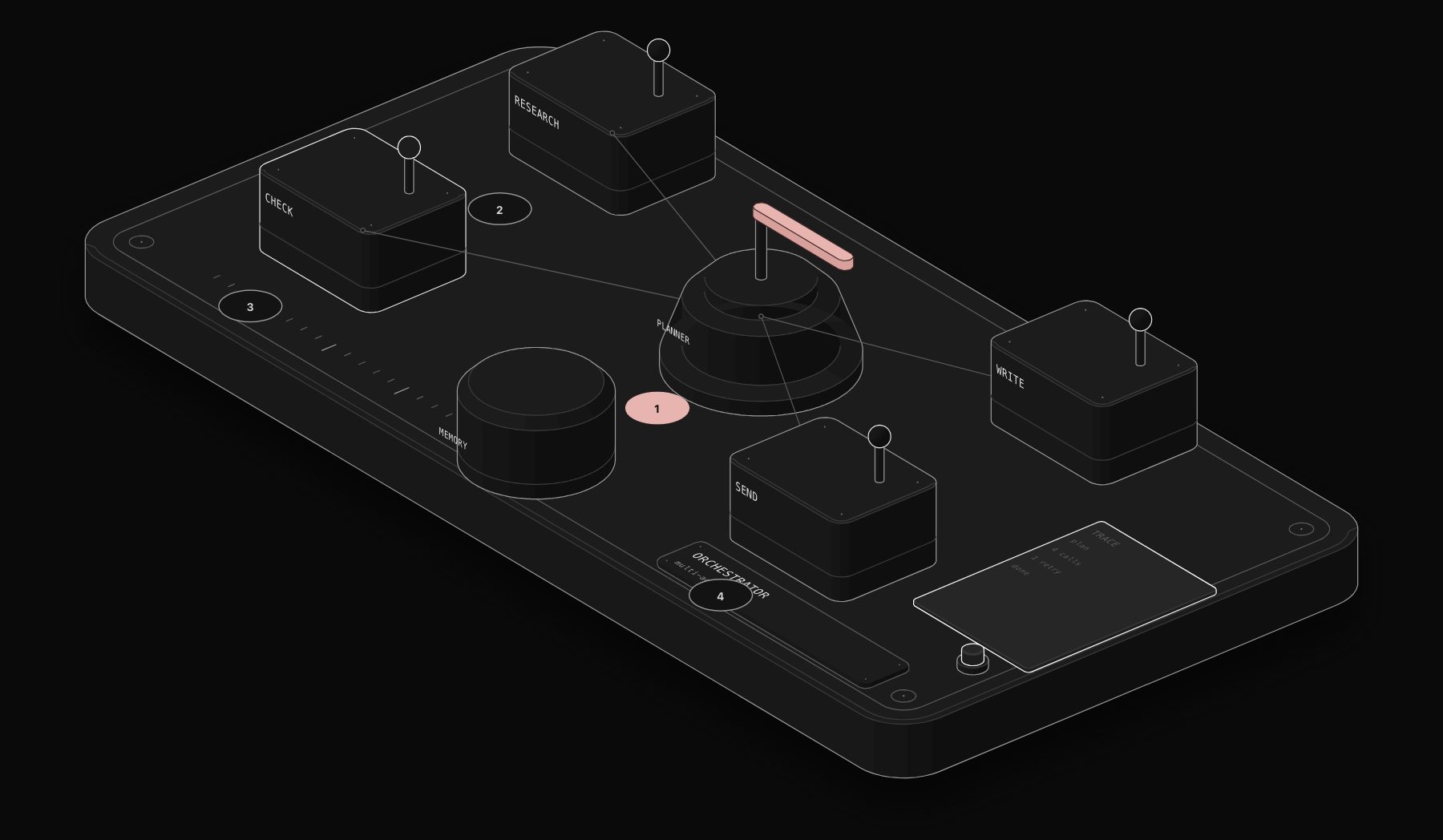
The most common and most reliable pattern in production multi-agent systems is the supervisor pattern: one orchestrating agent (or, in simpler implementations, deterministic workflow logic rather than an agent at all) receives the overall task, breaks it into subtasks, routes each subtask to the appropriate specialized agent, and assembles the results. The supervisor holds the overall context and decision authority, while specialized agents operate with narrower context focused entirely on their specific subtask.
This pattern's strength is predictability. Because the supervisor makes the routing decisions explicitly, it is far easier to debug a failure (you can inspect exactly which specialized agent was called with what input and what it returned) than in architectures where agents autonomously decide to hand off to each other without a central coordination point.
The Pipeline Pattern
A pipeline pattern chains agents in a fixed sequence, where each agent's output becomes the next agent's input, without a central supervisor making dynamic routing decisions. A document processing workflow might chain an extraction agent, a validation agent, and a formatting agent in a fixed order. This pattern is simpler to build and reason about than the supervisor pattern but is less flexible, since it cannot easily handle cases where the correct next step depends on what a previous agent found, which the supervisor pattern handles naturally through its routing logic.
The Peer-to-Peer Handoff Pattern
In this pattern, agents can directly hand off a task to another agent based on their own assessment that a different specialization is needed, without routing back through a central supervisor. This pattern appears in some of the more experimental multi-agent frameworks and offers the most flexibility, but it is also the hardest to debug and the most prone to failure modes like agents handing a task back and forth in a loop, or a task getting "lost" when no agent takes clear ownership of completing it. Most production business workflows are better served by the supervisor or pipeline patterns, reserving peer-to-peer handoff for narrower, well-understood domains where the handoff logic itself is simple and well-tested.
A useful rule when choosing between these patterns: start with the supervisor pattern by default. It is more work to set up initially than a simple pipeline, but it scales better as workflow complexity grows and it is dramatically easier to debug in production than peer-to-peer architectures, which is where most of the actual engineering cost in multi-agent systems ends up being spent.
Agent Handoff Protocols: What Actually Needs to Transfer
A handoff between agents needs to transfer more than just the raw output of the previous step. A well-designed handoff includes the specific task the receiving agent needs to perform, the relevant context from earlier in the workflow (not the entire history, which degrades performance and increases cost, but the specific facts the next agent needs), any constraints or requirements the output must satisfy, and a clear format for what the receiving agent should return.
Teams building their first multi-agent system commonly make the mistake of either passing too little context (the receiving agent has to guess at information it actually needs, producing lower-quality output) or too much (passing the entire conversation history to every agent in the chain, which increases cost, latency, and, counterintuitively, often reduces output quality because the agent has to work harder to identify what is actually relevant amid excess context). The fix is treating each handoff as its own deliberate interface design decision: define explicitly what data structure passes between each pair of agents, the same way you would define an API contract between two services.
Tool Use and Function-Calling Architecture
Multi-agent systems that take action in the real world, updating a CRM record, sending an email, creating a calendar event, do so through function calling or tool use, where the agent is given a defined set of tools (functions with specific parameters) it can invoke, and the underlying model decides which tool to call and with what parameters based on the task at hand. Both Anthropic's guidance on building effective agents and OpenAI's function-calling documentation cover the mechanics of this pattern in detail, and the core principle across both is the same: tools should be narrowly scoped, clearly named, and accompanied by precise descriptions of when to use them, since an agent given a vague or overly broad tool will use it incorrectly more often than one given a narrow, well-documented tool.
In a multi-agent architecture, tool access should generally be scoped per-agent based on that agent's specific responsibility, rather than giving every agent access to every tool in the system. A research agent that only needs to query information should not also hold a tool that can send emails or modify database records, both because it reduces the blast radius of a mistake and because a narrower tool set makes the agent's decision-making about which tool to use in a given moment more reliable.
Failure Modes and Guardrails
Multi-agent systems fail in ways that are qualitatively different from single-agent failures, and the guardrails need to account for these specifically. The most common failure modes include: context loss during handoff, where information a downstream agent needed was not properly passed forward and the agent proceeds anyway with incomplete information rather than flagging the gap; infinite or near-infinite loops, where a peer-to-peer or poorly bounded supervisor pattern keeps routing a task back and forth without making progress; cascading errors, where an early agent's mistake propagates through the entire chain because no downstream agent is designed to catch and flag an implausible input; and cost or latency explosion, where a workflow that seemed reasonable in testing calls agents far more times than expected in production due to an unbounded retry or routing loop.
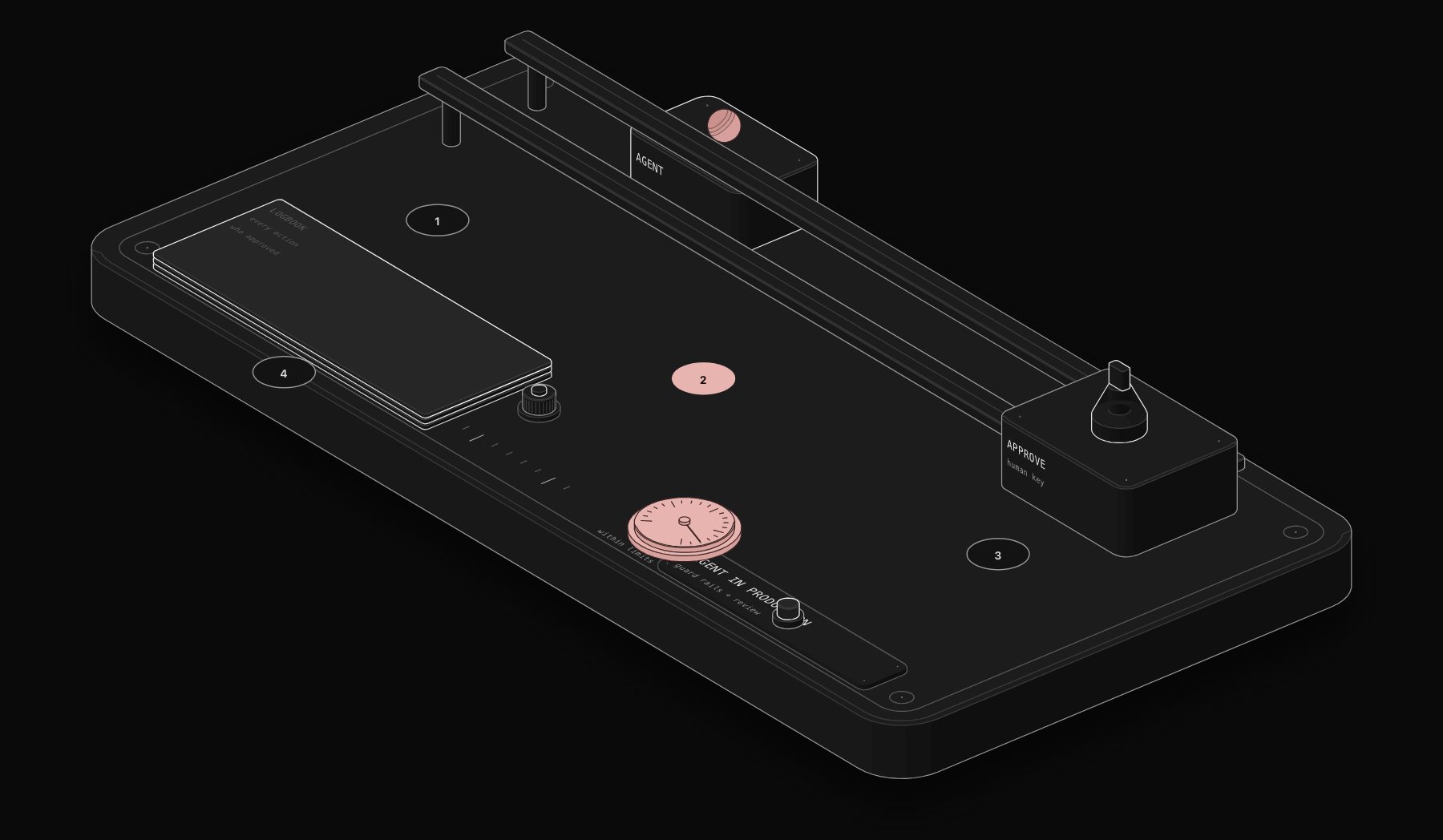
The practical guardrails against these failure modes: build explicit step limits into any loop or retry logic so a workflow cannot run indefinitely, build validation checkpoints where a downstream agent or deterministic logic checks that the previous step's output is plausible before proceeding rather than blindly trusting it, log every agent call and its input and output so a failure can be traced to the specific step and decision that caused it, and set explicit cost and latency budgets per workflow execution with alerting when a run exceeds expected bounds, since a runaway multi-agent loop can generate a surprising API cost bill before anyone notices something is wrong.
Testing and Evaluating Multi-Agent Systems Before Production
Testing a multi-agent system requires a different approach than testing traditional deterministic software, because the same input can produce slightly different outputs across runs, and a single successful test run does not guarantee reliability at scale. The practical approach is building an evaluation set: a curated collection of representative inputs, including known edge cases and previously observed failure scenarios, run through the full workflow repeatedly, with outputs scored against defined success criteria rather than checked for an exact match.
For workflows with a verification agent already in the architecture, that same verification logic often doubles as part of the evaluation framework, since it is already scoring outputs against defined criteria as part of normal operation. Teams should track evaluation results over time as the underlying models, prompts, or tool configurations change, since a prompt adjustment made to fix one failure case can silently degrade performance on a different case that was previously handled correctly, and this kind of regression is only visible if the evaluation set is run consistently rather than only when something has already gone wrong in production.
A staged rollout, running the multi-agent system in shadow mode alongside the existing manual or single-agent process for a defined period before fully cutting over, is the most reliable way to catch failure modes that a pre-launch evaluation set did not anticipate. Shadow mode means the multi-agent workflow runs and its output gets logged and compared against the actual outcome, without yet being the system of record making real decisions, which surfaces gaps in coverage or unexpected edge cases before they have real consequences.
Cost Management at Scale
Multi-agent workflows that perform well in a proof-of-concept with dozens of test runs can behave very differently at production volume of thousands or millions of executions monthly, and cost management needs to be designed in rather than discovered after the first unexpectedly large invoice. Beyond the step limits and monitoring covered in the failure modes section, effective cost management typically includes caching results for identical or near-identical inputs rather than re-running the full agent chain every time, routing simpler subtasks to smaller, cheaper models while reserving the most capable model for the specific steps that genuinely require its full reasoning capability, and setting per-workflow and aggregate daily cost ceilings with automatic alerting or throttling when a threshold is approached, rather than discovering a cost anomaly only when the monthly bill arrives.
Table: Choosing the Right Pattern for Your Workflow
| Workflow characteristic | Recommended pattern | Why |
|---|---|---|
| Fixed, predictable sequence of steps | Pipeline | Simplest to build and debug when the order never varies |
| Task requires dynamic routing based on intermediate results | Supervisor | Central decision point handles branching logic cleanly |
| High-stakes actions requiring verification before execution | Supervisor with a dedicated verification agent | Separates the generating agent from the checking agent for reliability |
| Exploratory research requiring flexible, unpredictable paths | Peer-to-peer, with strict step limits | Flexibility matters more than predictability, but needs hard guardrails |
| Simple, single-skill task | No orchestration needed | A single well-prompted agent, or no AI at all, is often the right answer |
Where n8n Fits Into Multi-Agent Orchestration
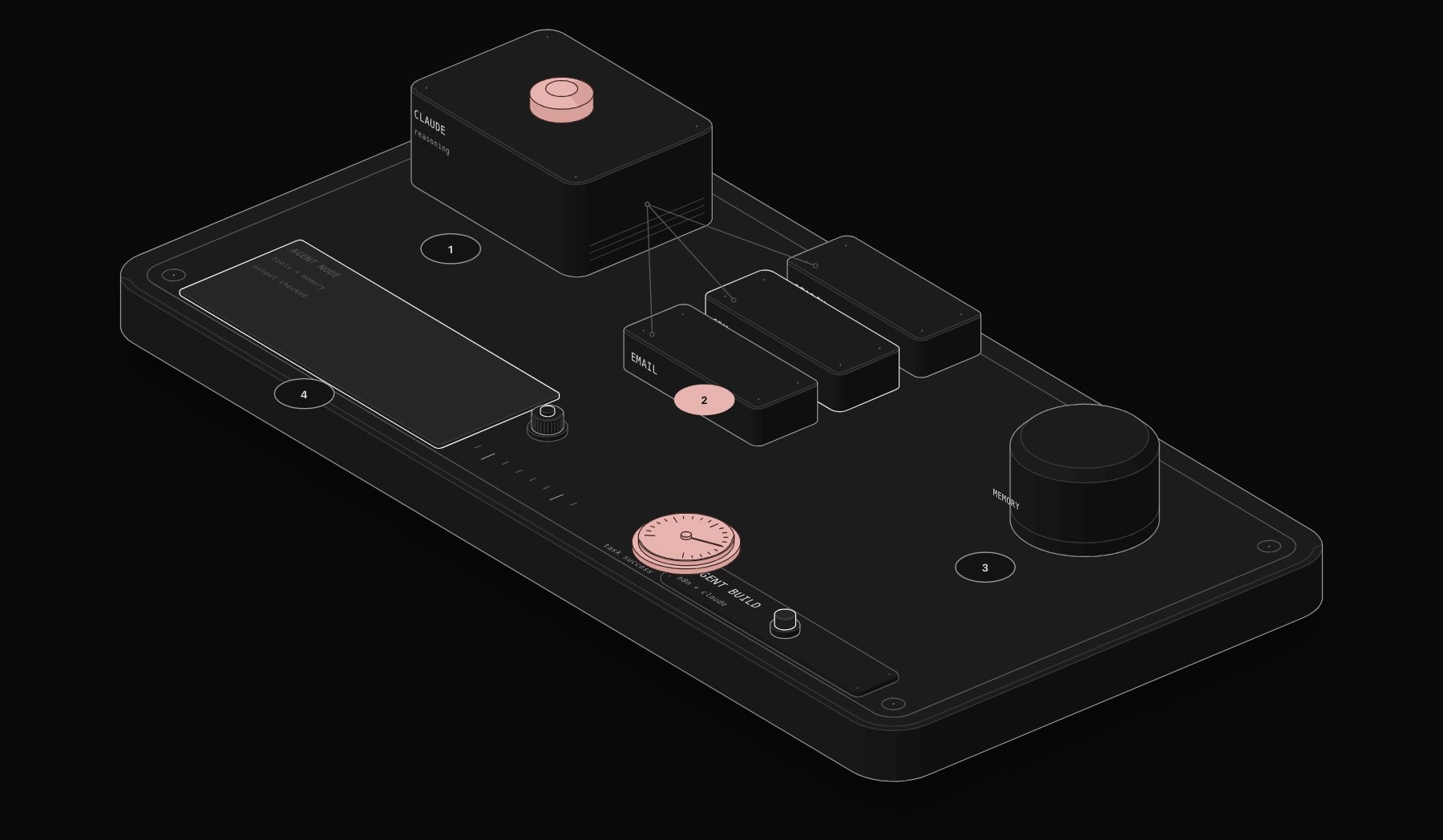
n8n's AI agent framework supports building multi-agent workflows visually, with each agent represented as a node that can call an LLM with a specific system prompt and tool access, connected through the platform's standard workflow logic for routing, branching, and error handling. This matters practically because it means the orchestration logic itself (the supervisor pattern's routing decisions, the step limits and guardrails discussed above) can be built using n8n's existing, mature workflow engine rather than needing a separate, purpose-built agent orchestration framework like LangGraph, which is a capable alternative for teams building primarily in code rather than a visual workflow tool.
The practical tradeoff between the two approaches: a code-first framework like LangGraph offers finer-grained control over agent state and routing logic for teams with strong engineering resources, while n8n's visual approach makes the same class of system buildable and maintainable by a broader range of technical staff, and integrates the agent orchestration directly alongside the rest of a business's existing workflow automation rather than as a separate system requiring its own deployment and monitoring infrastructure.
A Worked Example: Multi-Agent Customer Support Escalation
Consider a support workflow handling incoming tickets at meaningful volume. A classification agent receives each incoming ticket and categorizes it by type and urgency. Tickets classified as routine route to a drafting agent that generates a proposed response using the company's knowledge base as context. That draft passes to a verification agent, a separate agent instance whose only job is checking the proposed response against company policy and factual accuracy against the knowledge base, not generating content itself. If verification passes, the response sends automatically. If verification flags a concern, or if the original classification agent marked the ticket as high-complexity or high-risk, the workflow routes to a human agent instead, with the full context (classification, drafted response, verification notes) attached so the human is not starting from zero.
This architecture demonstrates several of the principles covered above simultaneously: a supervisor-style routing decision at the classification step, narrow tool and context scoping per agent (the drafting agent has knowledge base access but no ability to send messages directly, the verification agent has policy documents but does not generate content), an explicit guardrail (verification failure routes to a human rather than sending an unverified response), and a clear handoff contract between each stage. Businesses building AI agents into production workflows, whether for support, sales, or internal operations, consistently find that this kind of explicit, narrow-scoped multi-agent design produces more reliable results than a single agent asked to handle classification, drafting, and quality control all in one pass.
For a broader look at what production AI agent deployments actually look like across different business functions, see our guides on AI agents in production and what actually works with AI agents in 2026. If your business is ready to move from a single-agent pilot to a properly architected multi-agent system, our AI Agent Deploy plan is built specifically around this kind of implementation, and a free automation audit can assess whether your specific use case genuinely needs multi-agent orchestration or would be better served by a simpler single-agent approach first.
Frequently Asked Questions About AI Agent Orchestration
Do I need multiple agents, or is one well-designed agent enough?
For most business tasks, a single well-designed agent with clear scope and good tooling is sufficient and should be the starting point. Multi-agent orchestration adds real complexity and should be reserved for tasks that genuinely require different specializations, separate verification of high-stakes outputs, or context that exceeds what one agent can reasonably handle. Building multi-agent architecture for a task a single agent handles well is the most common over-engineering mistake in this space.
What is the biggest risk in multi-agent systems that businesses underestimate?
Cost and latency explosion from unbounded loops or retries is the risk most commonly underestimated, because it does not show up in early testing with a handful of manual runs, only at production scale when a workflow executes thousands of times and a rare edge case triggers an expensive retry loop repeatedly. Building explicit step limits and cost monitoring from the start, rather than adding them after an unexpected bill, is the single highest-leverage guardrail covered in this guide.
Should verification and generation always be separate agents?
For any output with real consequences if wrong (a customer-facing message, a financial transaction, a decision affecting a person), yes, a separate verification step is strongly recommended, since an agent checking its own work has the same blind spots that produced the error in the first place. For low-stakes, easily reversible outputs, a single agent without separate verification is often an acceptable and simpler tradeoff.
How do you debug a multi-agent workflow when something goes wrong?
Comprehensive logging of every agent call, including the exact input and output at each step, is the foundation of debugging multi-agent systems, since the failure is rarely in the final output alone but in a specific handoff or decision earlier in the chain. Building this logging in from the start, rather than adding it after a production failure you cannot diagnose, is significantly less painful than retrofitting observability onto a system already running in production.
Is n8n or a code framework like LangGraph better for building multi-agent systems?
n8n is generally the better choice for teams that want the agent orchestration integrated alongside existing business workflow automation and maintained by a broader range of technical staff, not exclusively specialized AI engineers. LangGraph and similar code-first frameworks offer finer control and are the stronger choice for teams with dedicated AI engineering resources building highly custom agent behavior that exceeds what a visual workflow tool's node-based logic can express cleanly.
How much does it cost to run a multi-agent workflow compared to a single agent?
Cost scales with the number of agent calls per workflow execution, which is inherently higher in a multi-agent system than a single-agent one, but the comparison is misleading without accounting for output quality and error rate. A single agent handling a task poorly suited to it often requires more retries, more human correction, or produces lower-quality output that carries its own downstream cost. Properly scoped multi-agent systems typically cost more per execution in direct API terms but less in total cost once error correction and quality are factored in, particularly for tasks with real consequences attached to a poor output.
How long does it take to move from a single-agent pilot to a production multi-agent system?
For a well-scoped business workflow with clear requirements, teams typically need two to six weeks to design the agent architecture, build the handoff and guardrail logic, and run a shadow-mode evaluation period before full production cutover. Workflows involving highly regulated decisions or extensive integration with legacy systems generally take longer, primarily due to the evaluation and compliance review process rather than the core agent-building work itself, which is usually the faster part of the timeline.
Tags
Purist Team
The PURIST editorial team covers automation, AI agents, and operations strategy for businesses scaling with n8n, Make, and Claude AI.