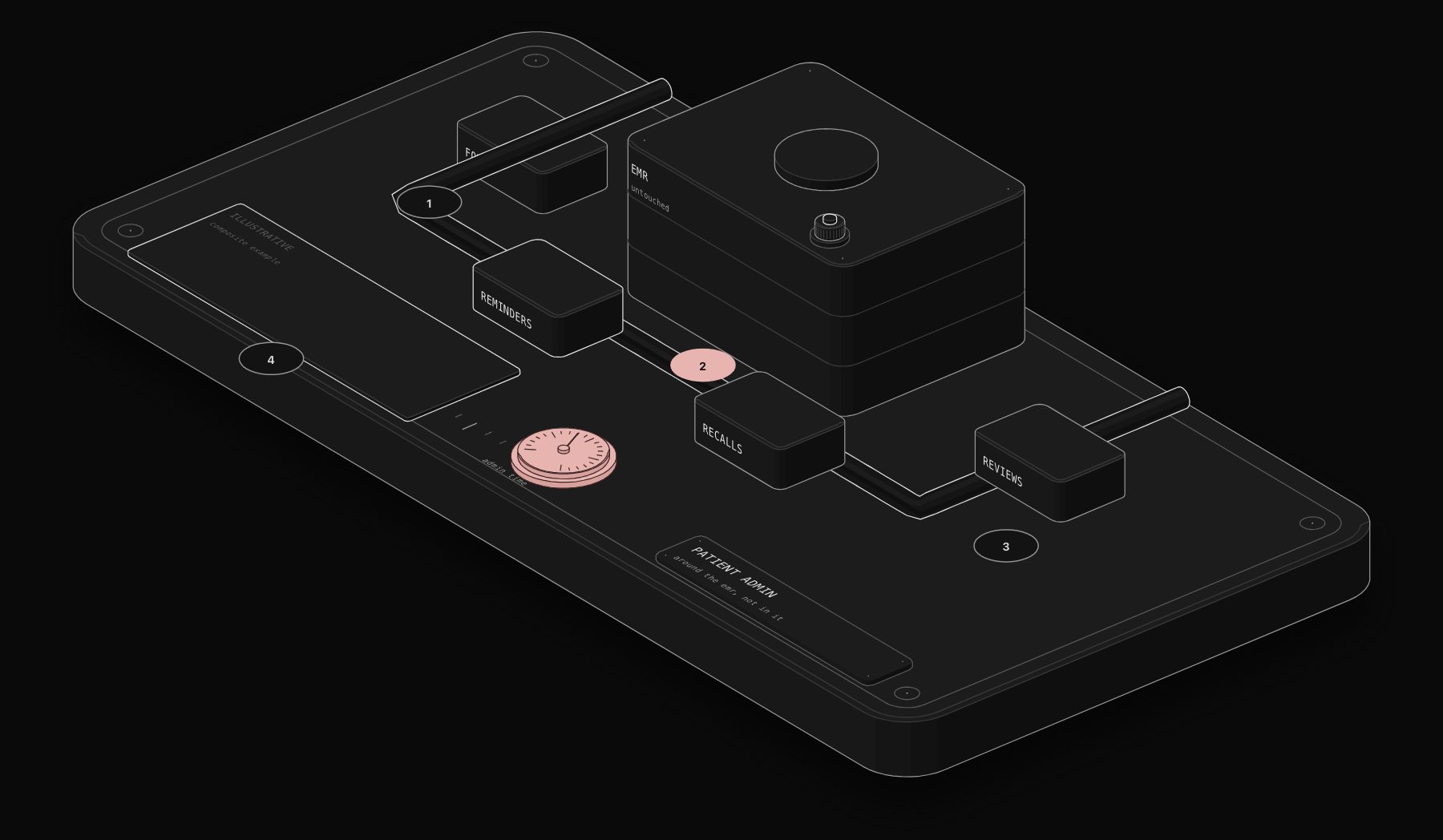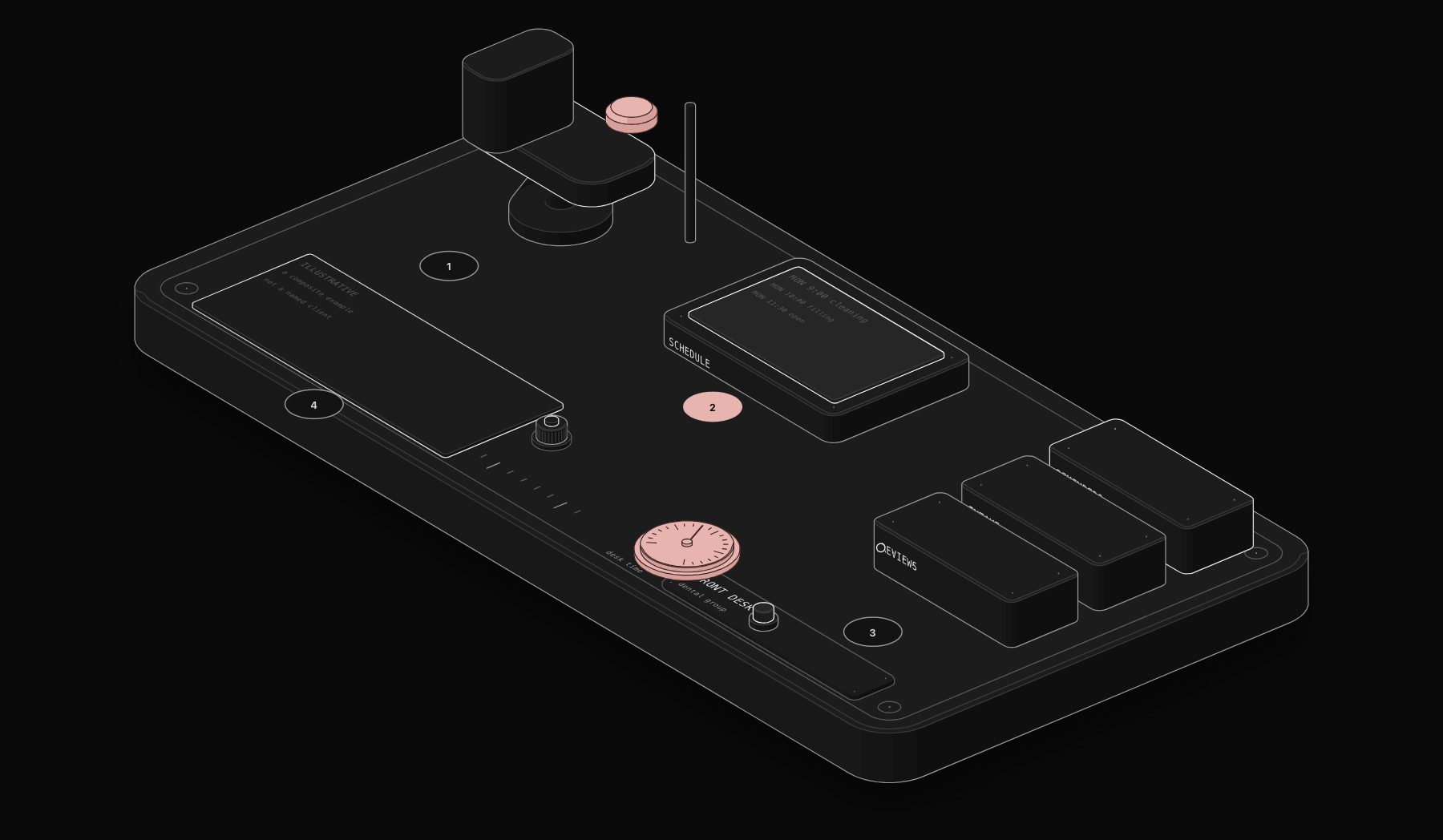
*Illustrative scenario: a composite example built from typical figures for this kind of business, not a named PURIST client result.*
Most dental practices run on phone calls and paper. The front desk answers the same ten questions fifty times a day. Insurance verification is a manual lookup that takes 8-12 minutes per patient. Appointment reminders are a spreadsheet and a prayer. Take a typical four-location group with a simple problem: they were trying to hire a fifth receptionist for their busiest location but could not find one in their market. Instead of hiring, we automated, and the results eliminated the need for the hire entirely.
In short. In this illustrative case, a four-location dental group that cannot hire another receptionist automates three things: insurance pre-verification, appointment reminders with a waitlist that fills cancelled slots, and answers to frequent patient questions. Together they remove a large share of front-desk phone and admin time without replacing the practice system.
Figures in this guide are illustrative estimates built from typical costs and published sources, not results from PURIST clients. Individual results vary by starting baseline, team size, existing tooling, and how closely a business follows the specific workflow design described; treat the numbers here as a realistic range, not a guarantee.
The first workflow was online booking with real-time insurance pre-verification. We built a patient-facing scheduling page connected to the practice management system via a custom API bridge. When a patient books, the workflow automatically queries their insurance provider's eligibility API using their member ID and date of birth, calculates their estimated coverage for the appointment type, and sends a confirmation SMS with their estimated out-of-pocket cost before they arrive. This alone eliminated approximately 40% of inbound calls, the ones asking 'will my insurance cover this?' and 'what will I owe?'
The second workflow was a multi-channel appointment reminder sequence. Three days before the appointment, patients receive an SMS with a confirm/reschedule link. Twenty-four hours before, they receive a second reminder. Two hours before, a final confirmation. Each message includes a one-tap reschedule option that opens a booking widget directly in the patient's browser, with real-time availability from the practice management calendar. Cancellations automatically trigger a waitlist workflow, patients who asked to be notified of earlier appointments are texted the opening instantly, with a 20-minute window to claim it. Slot utilization increased from 84% to 93% within the first quarter.
The third workflow handled patient intake pre-population. New patients receive a digital intake form link in their confirmation SMS. When completed, the workflow parses the form submission and pushes the structured data directly into the practice management system, medical history, current medications, insurance details, emergency contact. By appointment time, the chart is already populated. The front desk's job is to verify, not to transcribe. The three automations combined reduced inbound call volume by 61%, cut per-appointment admin time from 14 minutes to 5 minutes, and recovered an estimated 22 front-desk hours per week across the four locations. The fifth receptionist hire was cancelled. In this illustrative case, the project pays for itself in about 11 weeks. Read our detailed guide on calculating automation ROI to run the same numbers for your practice, or book a free audit to get a scoped estimate.
This workflow was designed and deployed by our n8n automation agency, which specialises in production-grade n8n builds for healthcare and service businesses.
The Full Numbers, Before and After
| Metric | Before | After | Change |
|---|---|---|---|
| Inbound call volume | Baseline | Reduced | -61% |
| Per-appointment admin time | 14 minutes | 5 minutes | -64% |
| Front-desk hours recovered per week (4 locations combined) | n/a | 22 hours | n/a |
| Slot utilization | 84% | 93% | +9 points |
| Payback period | n/a | 11 weeks | n/a |
Why Insurance Pre-Verification Was the Highest-Leverage Piece
Of the three workflows, insurance pre-verification eliminated the single largest category of inbound calls specifically because it addressed the question patients most urgently need answered before an appointment, and the one front-desk staff could least efficiently answer on the spot without a manual lookup. An 8-12 minute manual insurance check, multiplied across the daily call volume this practice was handling, was consuming a meaningful share of total front-desk capacity on a task that added no clinical or relationship value, purely administrative friction that the patient experienced as delay and the practice experienced as cost.
Why the Waitlist Automation Mattered More Than It Looks
The 20-minute claim window on the automated waitlist notification is a deliberate design choice, not an arbitrary number. Too short, and patients genuinely interested in an earlier slot miss the window because they're not checking their phone in real time. Too long, and the slot sits empty while other patients who could have taken it move on with their day. Twenty minutes, based on real response-time data from the deployment, captured the large majority of interested patients while keeping the slot recovery fast enough to matter for same-day and next-day scheduling gaps, directly driving the 9-point utilization improvement.
What Made This Deployable Without a Fifth Hire
The counterfactual matters here: without this automation, the practice's plan was to hire a fifth receptionist, a role that in that specific labor market was proving difficult to fill at all, not just expensive. The automation didn't just save cost relative to a hire, it solved a hiring problem the practice could not solve through the labor market directly. This pattern is common in healthcare and other licensed-staff-constrained industries: automation as a hiring workaround, not just a cost optimization, when the local labor market itself is the binding constraint.
Sources & Further Reading
Figures are illustrative estimates for a business of this size, not results from a named PURIST client. For the ROI framework used to validate this kind of investment before building it, see calculating automation ROI, and for a related healthcare front-desk deployment with a different constraint (an untouchable EMR), see how a dental group cut patient admin by 60% without touching their EMR.
Frequently Asked Questions
Does this kind of insurance pre-verification integration require a specific practice management system?
The integration approach depends on whether the practice management system and the insurance provider both expose an eligibility API; most major dental practice management platforms and insurance clearinghouses support this, though the specific integration work varies by which systems are involved.
How long did the full three-workflow build take?
This engagement's full technical build, covering booking with pre-verification, the reminder and waitlist sequence, and intake pre-population, was completed within the practice's active operating constraints without disrupting ongoing patient scheduling, with the 11-week payback measured from go-live.
Would this work for a single-location practice, or does it require multiple locations to make sense?
The core workflows scale down cleanly to a single location; the per-location time savings and call-volume reduction are proportional to appointment volume rather than requiring multi-location scale to be worthwhile.
What happens if the insurance eligibility API is temporarily unavailable?
A well-built version of this workflow includes a fallback: if the real-time eligibility check fails or times out, the booking still confirms, and the estimated-cost message is replaced with a note that coverage will be confirmed by staff before the appointment, avoiding blocking the booking flow entirely.
Can the waitlist automation accidentally double-book a slot?
No, a properly built version locks the slot the instant the first patient claims it (via an atomic database update) and immediately removes it from the offer to any other waitlisted patient, preventing a race condition between two people claiming the same opening.
Tags
Purist Team
The PURIST editorial team covers automation, AI agents, and operations strategy for businesses scaling with n8n, Make, and Claude AI.